Watching your child swim independently for the first time is an exciting moment. But between those big milestones, progress can be harder to recognize.
You might see your child practicing the same activities from week to week and wonder whether lessons are working. If they haven’t moved to the next level yet, it’s natural to ask what has changed.
At Hudson Valley Swim Richmond West, our curriculum gives swimmers a foundation to build on, from becoming comfortable putting their face in the water to developing coordinated strokes and greater endurance. Along the way, progress can include needing less assistance, performing a skill more consistently, or bringing several movements together.
Knowing what your child is working toward can help you notice those changes. Here are signs to look for and questions you can ask to better understand their progress.
For a child who is nervous around water, participating more willingly can be a meaningful step.
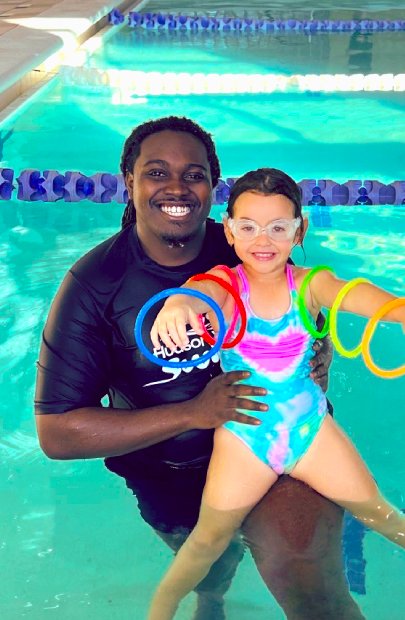
Perhaps your child previously needed plenty of reassurance before joining their instructor. Now they settle into the lesson more readily. They may be more willing to try an activity, put their face in the water, or return to something they found challenging.
Our beginner Starfish classes in the Elementary swim program include building confidence and learning to work independently with an instructor. That comfort supports the swimming skills children are practicing.
Signs you might notice include:
Growing comfort matters, but it should develop alongside swimming ability. A child who feels confident still needs appropriate supervision around water.
To a parent watching from the pool deck, blowing bubbles may look like a simple activity. For a beginner, it is part of learning to become comfortable submerging their face and controlling their breathing.
Face submersion while blowing bubbles is included in both our Starfish and Marlin beginner classes.
Progress might mean your child moves from barely touching the water with their mouth to willingly putting their face in. They may become more comfortable repeating the activity or need fewer reminders from their instructor.
These changes can be easy to miss if you are mainly watching for independent swimming.
Ask the swim instructor what they are looking for during the activity. Understanding its purpose can help you recognize what your child is learning, even when the exercise looks familiar.
Sometimes the activity stays the same while the amount of assistance changes.
Your child may still be practicing a back float, for example, but relying less on their instructor’s support. Or they may be swimming a short distance with fewer prompts than they needed previously.
In our beginner Elementary program, front and back floating, coordinated arm and leg movements, and short-distance independent swimming are among the skills children develop.
You might notice:
From the sidelines, those differences are not always obvious. Your instructor can help explain whether your child is becoming more independent and which parts still need practice.
A child may be able to kick enthusiastically or move their arms when prompted, yet find it difficult to combine those actions.
Swimming safely requires good coordination. As instruction progresses, children work on connecting their movements while maintaining body position and managing their breathing.
At Hudson Valley Swim Richmond West, that development continues through our intermediate classes. Lionfish swimmers work on skills including freestyle with side breathing, while Barracuda swimmers in our Youth swim program develop freestyle with continuous side breathing.
For a parent, progress may look like a smoother sequence. Your child might keep moving while taking a breath, maintain their kicking more consistently, or respond to an adjustment without stopping completely.
They may still be swimming the same distance, but with better technique, improved coordination, or greater confidence. That’s why progress isn’t measured by distance alone; it’s also about how comfortably and effectively your child moves through the water.
Completing a skill once is exciting, but being able to repeat it is another important step!
A swimmer might perform an activity successfully during one lesson and find it difficult the following week. That gives the instructor useful information about what still needs attention.
Look for changes across several lessons:
Our swim lessons build from foundational skills toward more advanced swimming. Repeated practice gives children opportunities to make those foundations more dependable.
If you see the same activity regularly, ask what the instructor is refining. Your child may be working on consistency, coordination, or independence within a skill they have already attempted.
Swimming progress includes skills that may receive less attention than a new stroke.
Treading water, for example, appears throughout Hudson Valley Swim’s Elementary and Youth programs. Beginner classes introduce it, and swimmers continue developing it as they advance.
Ask your instructor how your child is progressing with the water-safety skills appropriate to their level. Depending on what they are practicing, improvement might involve less assistance, more controlled movements, or being able to sustain an activity longer.
These skills deserve recognition alongside forward swimming.
For Chesterfield families looking forward to pool days and summer lake outings, developing water skills is valuable beyond the lesson itself. Our goal is to help children develop swimming ability and water-safety awareness together.
Lessons remain one layer of protection and should always be combined with active adult supervision and other appropriate safety measures. Pool skills also do not automatically prepare children for currents, changing depths, or other open-water conditions.
For children who already swim independently, progress may become more subtle.
They might swim farther, maintain their movements more consistently, or complete a familiar distance with greater control. Instead of learning an entirely new action, they may be refining how they perform it.
Our advanced Kingfish and Shark classes include stroke refinement and swimming longer distances. Shark swimmers also work on turns as they develop more advanced abilities.
You don’t have to be an expert in swimming technique to recognize your child’s progress! Ask the instructor what specific skill they’re focusing on and what improvement looks like.
For example, your child may be working toward maintaining side breathing throughout a swim. Knowing what to watch for helps you better understand their progress, even when the distance they swim might stay the same.
Moving up a level is a useful milestone, but it is not the only evidence of learning.
Hudson Valley Swim Richmond West’s Elementary and Youth programs have beginner, intermediate, and advanced levels. Swimmers advance as they develop their skills and meet the requirements for the next level.
Within a level, your child may have some skills that come readily and others that need more attention. They may also be working toward completing familiar activities with greater independence or consistency.
At the same time, you should feel comfortable asking questions if progress seems unclear. Reassurance is most helpful when it comes with an explanation of what has improved, what remains challenging, and how instruction is addressing it.
A brief conversation can make the lessons you watch much easier to understand.
Start with these questions:
If your child remains distressed, struggles with the class format, or seems to have stalled, share what you are noticing. Our Richmond West team can discuss their current placement and whether a different approach or a private lesson option may be helpful.
Parents can support progress by recognizing effort and observable changes!
Instead of asking why your child has not moved up yet, try comments such as:
These observations help children recognize their own learning without making every lesson feel like a test.
Regular swim lessons also provide continued opportunities to practice. That can be especially helpful when holidays and winter activities change the rest of the family routine. Your child’s instructor can help you understand what they are building toward as lessons continue.
You don’t have to wait for a new level to celebrate progress. Greater comfort, less assistance, more consistent skills, and better coordination can all be meaningful steps.
At Hudson Valley Swim Richmond West, we want you to understand how those steps connect to your child’s swimming goals. If you are wondering whether they are progressing, ask us. We can talk through what they are practicing and what comes next.
Explore our Elementary swim lessons or Youth swim lessons to learn more about your child’s program. Our Richmond West team is here to help Chesterfield families understand their child’s progress and feel confident about their next steps!
Experience Hudson Valley Swim! Explore our program, and find the perfect fit for your swimmer!
Offer available for new customers only.
