

When the school bus yellow begins to dominate our morning commutes in Montgomery County, most families automatically pack away the goggles, winterize backyard pools, and transition their attention to the structured rhythms of the school year. The general consensus is that "swimming season" is officially over, and with it, the conversation about water safety naturally fades.
This assumption, while understandable, represents one of the most critical gaps in child safety planning. Viewing water safety as a strictly summer concern creates a false, seasonal sense of security that puts children at risk. Water safety is a vital, year-round conversation that should be non-negotiable, particularly given our local environment in Gaithersburg, which is defined by a dense mix of residential pools, inland waterways, and continuous access to regional parks and lakes.
The peak drowning months of June, July, and August have passed, but the actual risk does not disappear when public outdoor pools close and lifeguards go off duty. Changing seasonal conditions create a new landscape of risk that many parents completely miss.
To effectively protect your family through the school year, you must understand how the environment in Gaithersburg changes during the off-season. According to mortality tracking from the CDC WISQARS database, over 2,500 unintentional drownings occur nationally outside of the peak summer months each year. Many of these incidents do not involve swimming at all. They are non-swimming, unmonitored falls into water that nobody expected anyone to be near.
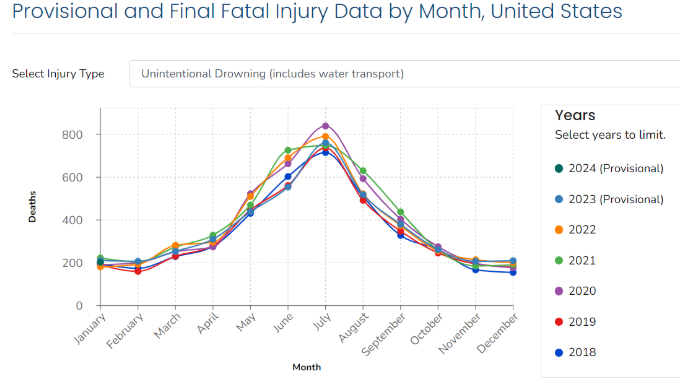
During the summer, our supervision around the water is active. A parent on a patio in July is usually actively watching children in swimsuits because they know swimming is the primary activity.
In October, however, family routines shift, and our guard is naturally down. When hosting non-swimming gatherings, such as a casual autumn barbecue, a fall playdate, or simply parents relaxing on the deck, supervision around the water, even a covered or closed backyard pool, frequently drops to zero.
A toddler chasing a falling leaf, a young child exploring, or anyone navigating a slick deck can fall into an open or poorly secured body of water in seconds. Without a dedicated "Water Watcher" (an adult solely focused on the water, without distractions like phones or conversation), a quiet non-swimming fall day can turn catastrophic.
As pool use drops, homeowners frequently slow down on filtering, cleaning, and chemical maintenance. Leaves collect quickly. Murky water, or water with heavy debris, significantly decreases visibility. If a child slips and falls into a murky off-season pool, they become invisible immediately, cutting crucial rescue time, seconds that matter most in a water emergency. A pool must remain clear and filtered all winter long as long as it is uncovered.
Autumn and winter bring specific physical hazards to Maryland waterways and backyard environments:

Gaithersburg is home to beautiful parks and lakes, such as Lake Needwood and Seneca Creek State Park. While these facilities often have water access, they are not always actively guarded during the non-summer months, even when open for viewing or other activities. Ending up in a sudden emergency in an unmonitored environment dramatically increases the risk.
Preventing off-season tragedies requires a strategy built on multiple layers of protection, starting with maintaining barriers and supervision at all times. However, the most vital and persistent layer of protection you can provide your child is a foundation of muscle memory in the water.
Data published in a CDC Vital Signs report confirms that drowning remains the leading cause of accidental injury death for children ages 1 to 4 nationwide. Yet, formal, structured swim instruction can reduce drowning risk among young children by up to 88%.
The danger of pulling kids out of lessons in September is skill regression. Water confidence, muscle memory, and breath control fade during the off-season. When summer returns, those children are not picking up where they left off; they are often spending the first two months relearning skills they had last August.
By maintaining weekly indoor swim lessons through the fall and winter, you provide your child with critical advantages:
As the school year picks up momentum, we urge all families in the Gaithersburg area to put these basic safety protocols into practice today:
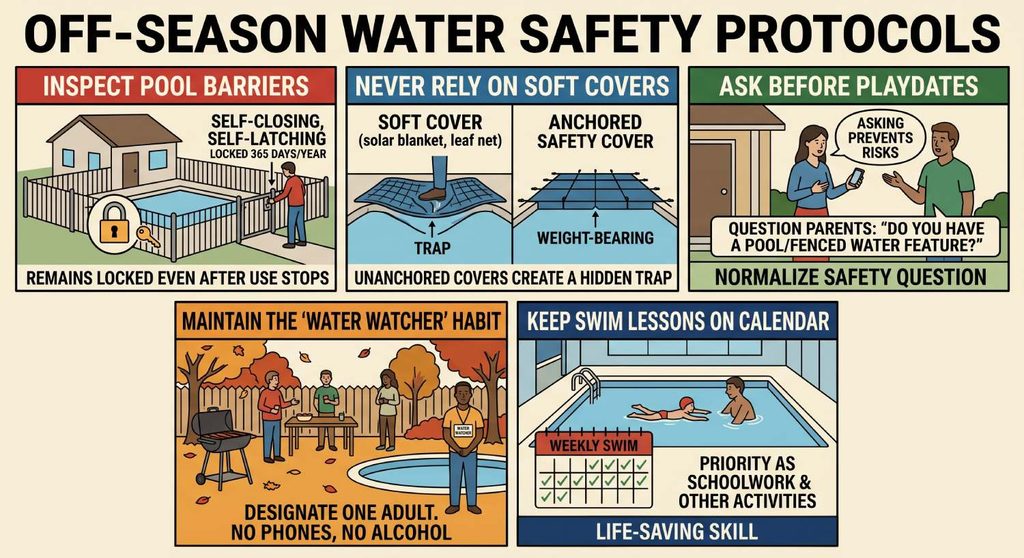
Water safety is not seasonal in Gaithersburg. By recognizing the changing hazards of our environment and prioritizing continuous, year-round water education, you provide your family with the layered protection needed to stay safe in every season.
Our dedicated instructors teach year-round indoor swim lessons in a warm, comfortable environment located inside LA Fitness in Rio (Downtown Crown).
Ready to get started? Explore our class schedules and find the lesson plans that fit your routine on our Pricing & Schedule page, or give our Gaithersburg team a call right now at (301) 901-0922.
Location:
Hudson Valley Swim® - Gaithersburg
LA Fitness in Rio (Downtown Crown)
314 Copley Place
Gaithersburg, MD 20878

Experience Hudson Valley Swim! Explore our program, and find the perfect fit for your swimmer!
Offer available for new customers only.
