Autumn in Northeast Florida looks a bit different than it does in other parts of the country. While families up north are closing their pools for the season and pulling out winter coats, Jacksonville residents are still enjoying warm temperatures, sunny afternoons, and regular trips to local waterways. Kids head back to local schools, after-school sports start up, and daily schedules get busy, but the warm Florida sunshine stays right where it is.
Because swimming is such a natural part of daily life in First Coast communities, it is easy for parents to relax their guard once the formal summer vacation period ends. We tend to view water safety as a summer-only priority when we are planning active trips to Jacksonville Beach, Neptune Beach, or local splash pads.
That mindset creates a dangerous gap in child safety. In a region surrounded by the St. Johns River, the Intracoastal Waterway, retention ponds, residential pools, and neighborhood creeks, water exposure happens every single day of the year.
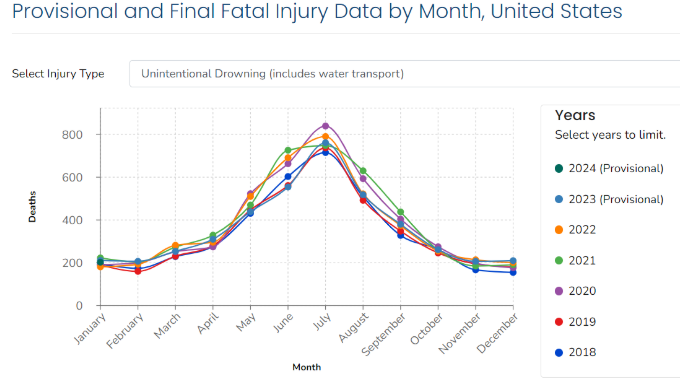
National public safety campaigns focus heavily on June, July, and August, but the risk of drowning does not disappear when summer ends. Statistics from the CDC WISQARS database show that more than 2,500 unintentional drowning deaths happen outside the peak summer months each year across the United States. In warm coastal areas like Jacksonville, those off-season numbers are a serious reminder that water hazards are always present.
Off-season water accidents rarely occur during a planned, supervised family swim. Instead, they happen during routine daily activities when no one expects a child to be near the water.
Screened-in patio pools, often called lanais, are a staple of Jacksonville homes. While these enclosures do a great job keeping out bugs and leaves, parents often mistake them for complete safety barriers.
During the busy school year, back doors leading to the lanai are frequently left unlocked while parents prepare dinner, help with homework, or unpack backpacks. A curious toddler or a young child chasing a pet can step through an open door and reach the pool edge in a matter of seconds. A screen enclosure alone is not a replacement for a dedicated interior pool safety fence.
Jacksonville’s landscape features thousands of retention ponds, drainage canals, and marshy tributaries connected to the St. Johns River. These water features sit right inside residential neighborhoods, apartment complexes, and near elementary schools.
When kids ride bikes home from school, visit classmates down the street, or play outside during cooler fall evenings, these natural and man-made water hazards sit completely unmonitored. They lack clear edges, have zero underwater visibility, feature steep drop-offs, and carry no lifeguard supervision. A simple slip on a muddy bank can pull a fully clothed child under water instantly.
The start of the school year brings new friendships and invites to new homes after school. Parents often drop off their children expecting typical indoor play, but safety measures around water features vary widely from house to house.
A host parent might be busy indoors assuming the children are playing video games in a bedroom, while the kids wander outside toward a backyard pool, hot tub, or nearby pond.
Fall weather along the First Coast is ideal for casual weekend family outings to the beach. However, municipal lifeguard staffing along Jacksonville beaches scales back significantly after Labor Day. Swimmers who encounter sudden rip currents or unexpected drop-offs during the off-season face much higher risks without active tower surveillance nearby.
Growing up in North Florida means water is a constant element of life. For local children, learning how to swim is not just a fun extracurricular sport like soccer or dance, it is an essential life-saving capability.
Data from a CDC Vital Signs report notes that drowning is the leading cause of accidental injury death for children ages 1 through 4 nationwide. Yet research indicates that participating in formal, structured swim lessons reduces drowning risk in young children by up to 88%.
The word formal is key here. Casual summer splashing builds familiarity with water, but it rarely instills the automatic self-rescue instincts a child needs during a sudden fall or emergency.
When families pause swim lessons in September, children experience a gradual drop in technical skill, breath control, and water stamina over the fall and winter months. Keeping kids enrolled in indoor lessons year-round provides essential safety benefits:
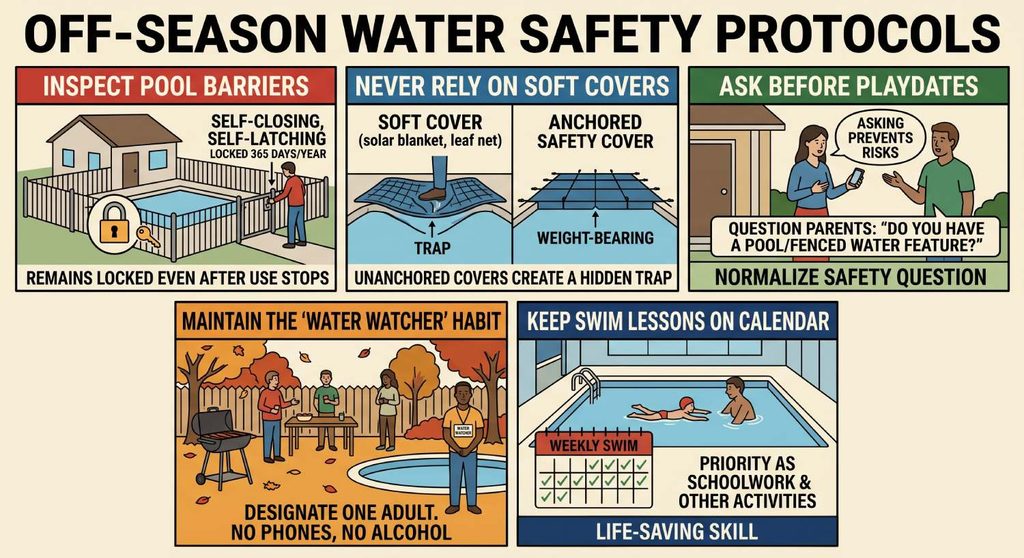
Protecting your children during the school year comes down to practical, everyday precautions:
Water safety is an everyday priority in Jacksonville. By recognizing the unique environmental factors in our area and keeping up with continuous skill development, you give your child the tools to stay safe around water in every season.
If you want to build strong, life-saving water skills for your child that last through every season, Hudson Valley Swim offers year-round indoor swim lessons in Jacksonville at two convenient locations.
Ready to get started? Check out class schedules and program options on our Pricing & Schedule page, or call our team directly at (904) 442-8288.
Next to Church of the Good Shepherd
1100 Stockton St.
Jacksonville, FL 32204
At Temple Builders Fitness
5310 Lenox Ave #27
Jacksonville, FL 32205
Experience Hudson Valley Swim! Explore our program, and find the perfect fit for your swimmer!
Offer available for new customers only.
