

When fall settles into the Lilac City, routines across Rochester shift quickly. Families get busy managing morning school drop-offs, weekend soccer games, and after-school activities. Backpacks replace beach bags, local outdoor swim spots wrap up their seasonal operations, and the mental book on "swimming season" is closed. It feels natural to assume that once the weather cools, the urgency around water safety can fade until late next spring.
Viewing water safety as strictly a seasonal topic creates a false, dangerous sense of security that puts children at risk during the autumn, winter, and spring.
Between residential pools that might stay uncovered into early autumn, neighborhood retention basins, and unmonitored access to local waterways like the Cocheco River, water is a constant presence in Strafford County. Water safety is not a summer-only conversation. It is a vital, year-round life skill that should remain a non-negotiable priority for every family.
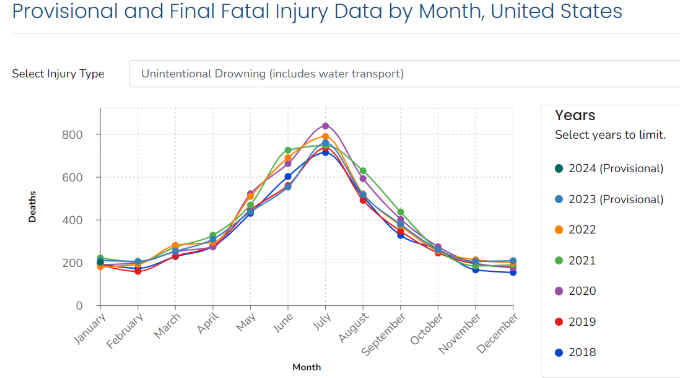
The peak drowning months of June, July, and August may have passed, but the actual risk does not disappear when lifeguards leave their posts or outdoor temperatures begin to drop. Changing family routines and unmonitored off-season aquatic hazards create a new landscape of risk that many parents completely miss.
Drowning during the school year rarely occurs during a planned, supervised family swim. Instead, accidents happen during routine daily activities when adult attention is naturally focused elsewhere. According to mortality tracking from the CDC WISQARS database, more than 2,500 unintentional drowning deaths occur nationally outside of the peak summer months each year. These incidents are non-swimming, unmonitored falls into water when nobody expected anyone to be near it.
Early autumn in New Hampshire can sometimes bring unseasonably warm spells. Homeowners frequently leave backyard pools open past Labor Day to enjoy those pleasant afternoons.
The risk comes from changing family routines. A parent hosting a non-swimming autumn gathering or tackling yard work in October naturally relaxes active pool supervision because no one is dressed for swimming. Yet a toddler wandering off or a child running near a deck can fall into an open, unmonitored pool in seconds. Without a dedicated Water Watcher focused solely on the water, a quiet fall afternoon can turn catastrophic.
As swimming activity slows down, home pool maintenance often takes a backseat. Filtration systems run less frequently, chemical balances shift, and fallen autumn leaves quickly accumulate at the bottom of the pool.
This leads to a severe secondary danger: reduced water clarity. If a child slips into murky, leaf-filled water, they become invisible from the surface almost instantly. In a water emergency, quick detection is everything, and cloudy water drastically reduces response time, seconds that matter most. A pool must remain clear and filtered as long as it is uncovered.

Autumn brings specific physical hazards to local waterways and backyard environments:
The school year brings playdates at new classmates' homes. Parents routinely drop off their children without knowing whether the host home has an unsecured pool, a hot tub, or a creek running behind the property.
At the same time, many residential developments feature retention ponds and drainage basins. When kids play outside in the early evening, these unfenced water features present real risks with steep banks, murky water, and zero adult supervision or lifeguarding presence.
Preventing off-season tragedies requires a strategy built on multiple layers of protection, starting with maintaining barriers and supervision at all times. However, the most vital and persistent layer of protection you can provide your child is a foundation of muscle memory in the water.
Data published in a CDC Vital Signs report confirms that drowning remains the leading cause of accidental injury death for children ages 1 to 4 nationwide. Research demonstrates that participating in formal, structured swim instruction can reduce drowning risk in young children by up to 88%.
Taking a break from swim lessons in September leads to skill regression over the fall and winter months. Water confidence, muscle memory, and breath control fade during the off-season. When summer returns, those children are not picking up where they left off; they are often spending the first two months relearning skills they had last August.
By maintaining weekly indoor swim lessons through the fall and winter, you provide your child with critical advantages:
As the school year takes priority, we urge all families in the Rochester area to put these basic safety protocols into practice today:
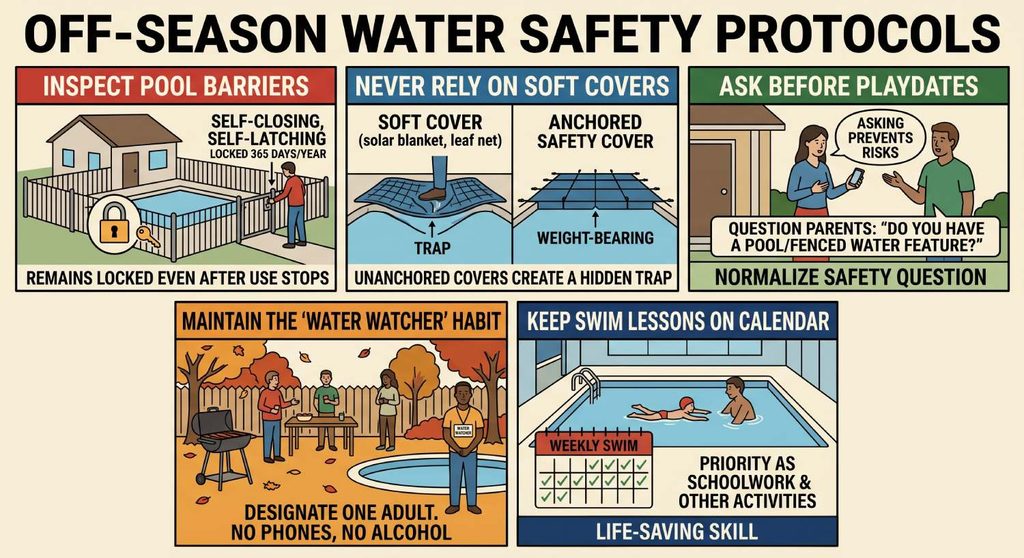
Water safety is not seasonal in New Hampshire. By recognizing the changing hazards of our environment and prioritizing continuous, formal water education, you provide your family with the layered protection needed to stay safe in every season.
If you want to build strong, technical swim capability that lasts through every season, Hudson Valley Swim - Rochester is here to help. Our dedicated, experienced instructors teach year-round indoor swim lessons in a warm, comfortable environment located inside the Holiday Inn Express.
Ready to get started? Explore our class schedules and find the lesson plans that fit your routine on our Pricing & Schedule page, or call our Rochester team directly at (603) 403-5199. We look forward to helping your family stay safe in the water.
Location:
Hudson Valley Swim® - Rochester
Holiday Inn Express
77 Farmington Rd
Rochester, NH 03867

Discover why families trust Hudson Valley Swim for safe, fun, and effective swim lessons!
Offer available for new customers only.
