The first time your child swims across the pool without help is a moment worth celebrating. After watching them build confidence, practice, and work through challenges, you can see how far they’ve come.
It can also raise a reasonable question: do they still need swim lessons?
At Hudson Valley Swim Stamford, we encourage parents to celebrate that accomplishment and talk with their instructor about what comes next. Swimming across the pool shows progress, but distance is only one part of learning to swim. How your child breathes, stays in control, rests in the water, and repeats their skills also matters.
Understanding those pieces can help you decide what continued lessons could offer your child.
Crossing the pool shows that your child can swim that distance in that setting. That is a great achievement!
To understand their progress more fully, it helps to look at how they complete the swim.
For example:
You don’t need to figure this out on your own. Your child’s instructor can explain what they are doing well and which areas still need practice.
One child might make it across while still finding it difficult to breathe and keep moving. Another may swim the same distance more smoothly and consistently. Both have made progress, but what they work on next may be different.
When parents picture swimming ability, moving through the water often comes to mind first. But being comfortable and capable in the pool also involves skills that don’t take a child from one side to the other.
Floating and treading water are examples. They involve staying in place rather than continuing to swim forward.
Our children’s swim lessons include front and back floating, coordinated arm and leg movements, short-distance independent swimming, and beginning treading water in the Starfish level.
These activities have a purpose even when your child can already swim across the pool. They give children practice with different ways to support themselves and control their movements in the water.
Ask your instructor how your child is doing with these skills alongside their forward swimming.
A child may be able to swim a short distance while holding their breath or stopping to lift their head. Learning to breathe while keeping their movements going is another step.
That takes practice. Children are learning how to bring their body position, arms, legs, and breathing together.
At Hudson Valley Swim Stamford, our intermediate Lionfish classes include freestyle with side breathing. In our Youth swim lessons, Marlin swimmers begin working on freestyle with side breathing, while Barracuda swimmers develop continuous side breathing.
For a parent, improvement might look like fewer stops, smoother swimming, or less interruption when your child takes a breath.
They may be swimming the same distance as before, but doing it with more comfort and control. Continued lessons give them time to practice those changes with their instructor’s help.
It’s exciting when your child learns a new skill! Being able to repeat it consistently is another important part of learning.
Your child might swim across the pool during one lesson and find it difficult the following week. Their concentration, comfort, and the amount of help they receive can all affect how an activity goes.
Regular practice helps the instructor see what is becoming familiar and what still needs attention.
Useful questions include:
You don’t need to test your child or ask them to prove their ability during family pool time. Their swim lessons give the instructor opportunities to watch, offer feedback, and help them keep improving.
Swimming farther is a great goal, but staying in control throughout the swim is just as important.
A child may start with smooth, coordinated movements, then find it harder to keep them going as they get tired. Lessons give them opportunities to build endurance gradually while continuing to practice how they swim.
Our advanced Kingfish and Shark classes include improving stroke technique and swimming longer distances. Shark swimmers also work on turns as part of their more advanced instruction.
That does not mean every child needs to pursue competitive swimming. Being able to swim longer with more controlled movements can be worthwhile for children who simply enjoy spending time in the pool.
Your instructor can help explain which goals fit your child’s current abilities and interests.
If you have a younger child who is not yet swimming across the pool, the same idea applies: each milestone gives them something to build on.
Through our Infant & Toddler swim lessons, young children begin their swimming experience with a parent or caregiver participating in the water with them.
As children grow and move into age-appropriate programs, their instruction builds on what they can do and how comfortable they feel.
Joining in more willingly, putting their face in the water, floating with less help, and learning to move their arms and legs together can all be meaningful steps.
Independent swimming is an exciting milestone along the way. It gives the instructor something to build on as your child continues learning.
For Stamford families, swimming might include time at a backyard pool, a community pool, or a beach along Long Island Sound. Each setting can bring different challenges.
A familiar lesson pool is different from open water or even an unfamiliar pool. Water depth, visibility, waves, currents, and the distance to a place to get out can change the experience.
Continued instruction can help children develop their swimming ability, but no lesson milestone makes a child safe in every situation.
Children still need appropriate, active adult supervision around water, regardless of how far or how well they can swim. Their abilities should always be considered alongside the setting, conditions, and other necessary safety measures.
As your child becomes more confident, keep celebrating their progress while making careful decisions about where and how they swim.
Rather than deciding based only on distance, ask your instructor for a clear picture of your child’s progress.
Three questions can help:
You deserve to understand the purpose of your child’s lessons. If the next steps feel unclear, our Stamford team can talk through their progress and explain what the instructor is focusing on.
After a big accomplishment, children may be eager to learn more. Others may feel that they have reached the goal they were working toward.
Keep the conversation positive. Recognize what they have achieved, then ask what they enjoy about lessons or would like to feel more comfortable doing.
You might say, “You worked hard to swim that distance. Great job! Let’s ask your instructor what you’re going to practice next.”
Keeping the focus on their progress gives them a part in the conversation and something to look forward to.
At Hudson Valley Swim Stamford, we want children to feel encouraged as their abilities grow. Explore our children’s swim lessons or Youth swim lessons, and talk with our team about your child’s next steps.
Swimming across the pool is a wonderful accomplishment. With a clearer understanding of their skills and goals, you can help your child make the most of what comes next.
Between school events, family visits, travel plans, and holiday celebrations, November and December can fill up quickly. Even activities your child enjoys can become harder to fit into the calendar!
If you’re wondering how to keep swim lessons going through the holiday season, you don’t need a perfect attendance plan or a completely open schedule. A little preparation and communication can help you make room for continued learning while enjoying time with family.
At Hudson Valley Swim Stamford, we want lessons to be a positive part of your child’s week. The holidays can be an opportunity to keep a familiar activity going, continue practicing, and give your child something of their own to look forward to.
Here are some practical ways to make that routine more manageable.
A few minutes with the family calendar can prevent last-minute confusion.
Look ahead at your child’s regular lesson time alongside travel dates, school performances, family gatherings, and other commitments. Note any conflicts you already know about, then check our Stamford lesson schedule and any updates from our team about holiday closures or makeup lessons.
It can help to separate a specific scheduling conflict from a generally busy season. A trip that affects one lesson may call for a conversation about that absence, rather than a decision to pause lessons for the entire month.
Before making changes, ask us:
Checking early gives you a clearer idea of your options and one less thing to figure out at the last minute.
The holidays bring plenty of changes to a child’s usual week. School breaks, visiting relatives, and special events can all shift familiar routines.
When your existing lesson time still works, keeping it can simplify one part of the calendar. You already know when to leave, what to pack, and how the activity fits into your day.
For your child, that familiar lesson can be something to look forward to amid the holiday changes. They know they’ll have time in the pool, activities to practice, and opportunities to work toward their next swimming goal!
As colder weather settles into Stamford and beach days along Long Island Sound feel far away, lessons can keep swimming part of your child’s week. It gives them a chance to stay active and continue learning without waiting for warmer weather.
Sometimes the hardest part of attending a winter activity is everything that happens before it.
A missing pair of goggles or a damp towel can make an already busy afternoon feel more stressful. Keeping your swim bag ready helps reduce those small obstacles.
After each lesson, try making it a habit to:
Check our program requirements so you have what your swimmer needs. During colder weather, leave enough time for your child to dry off, change, and get their coat on before heading outside.
If your child is old enough, let them help with a simple packing checklist. It gives them a role in preparing for their lesson and takes one small task off your plate.
When the calendar is crowded, it is easy for every activity to start feeling like another obligation.
Try to preserve what your child enjoys about swimming. Ask what they are looking forward to practicing or what they loved about their last lesson. Give them space to share an accomplishment without making every conversation about moving up a level.
At Hudson Valley Swim Stamford, our swim lessons give children opportunities to build comfort, confidence, and swimming skills with their instructor’s guidance. During a busy month, that dedicated time to move and learn can be valuable on its own.
For some children, the highlight might be practicing a new movement. For others, it may be seeing familiar classmates or feeling more comfortable with an activity that used to be challenging.
Those are worthwhile reasons to keep showing up!
Understanding your child’s current goals can make the value of continued lessons easier to see.
Perhaps they are floating with less help. They may be getting better at moving their arms and legs together or learning when to take a breath while swimming.
A brief conversation with the instructor can help you understand how the activities you see connect to those goals.
You might ask:
You don’t need to turn holiday time into extra swimming practice. The idea is to understand what your child is learning and know what to expect when they return if they miss a lesson.
Family travel and special events happen. Missing a lesson does not erase everything your child has learned.
If you know you will be away, let our Stamford team know according to our absence policy. You can always ask if there are any options for making up a lesson or adjusting the schedule, but it’s best to see what’s available rather than count on it.
When your child returns, keep the conversation encouraging. They may settle straight back in, or they may need a little time to feel familiar with the routine again.
Let the instructor know about anything that might help, such as your child feeling nervous about returning. That information can help them support your swimmer!
If illness changes your plans, give your child time to recover and follow our illness and absence guidance. Staying consistent is important, but that doesn’t mean you should feel like you have to attend when your child isn’t feeling well. Your child’s health is important, and so is keeping other swimmers safe.
Sometimes a family’s schedule needs more than a small adjustment. If you are considering pausing lessons, our Stamford team can help you talk through your options before you decide.
Ask about what your child is working on, available class times, and any enrollment policies you should know about. If you plan to return later, check how signing up again works and whether your preferred class time would still be available.
Having that conversation can make the decision easier. You may find that your current routine still works, that another available time fits better, or that a break is what your family needs.
We want you to understand your options and feel comfortable discussing them.
Children don’t need a major milestone every week to have a worthwhile lesson.
During the holidays, focus on specific efforts you notice:
These comments help children recognize their own progress without adding pressure to an already eventful season.
Regular swim lessons give children time to practice familiar skills, try their instructor’s suggestions, and keep improving. Your child can continue learning at their own pace, even while the rest of the month looks different.
Keeping swim lessons in the holiday routine starts with a manageable plan: check the calendar, prepare ahead, and talk with us when conflicts arise.
At Hudson Valley Swim Stamford, we’re here to help your child continue learning and enjoying their time in the water. Whether they are getting comfortable with the basics or working on more advanced skills, a familiar lesson can remain a welcome part of a busy week.
Have questions about your holiday schedule or your child’s next steps? Reach out to our Hudson Valley Swim Stamford team to discuss lesson options, scheduling, and how we can help your family keep swimming through the season!
Watching your child swim independently for the first time is an exciting moment. But between those big milestones, progress can be harder to recognize.
You might see your child practicing the same activities from week to week and wonder whether lessons are working. If they haven’t moved to the next level yet, it’s natural to ask what has changed.
At Hudson Valley Swim Stamford, our curriculum gives swimmers a foundation to build on, from becoming comfortable putting their face in the water to developing coordinated strokes and greater endurance. Along the way, progress can include needing less assistance, performing a skill more consistently, or bringing several movements together.
Knowing what your child is working toward can help you notice those changes. Here are signs to look for and questions you can ask to better understand their progress.
For a child who is nervous around water, participating more willingly can be a meaningful step.
Perhaps your child previously needed plenty of reassurance before joining their instructor. Now they settle into the lesson more readily. They may be more willing to try an activity, put their face in the water, or return to something they found challenging.
Our beginner Starfish classes in the Elementary swim program include building confidence and learning to work independently with an instructor. That comfort supports the swimming skills children are practicing.
Signs you might notice include:
Growing comfort matters, but it should develop alongside swimming ability. A child who feels confident still needs appropriate supervision around water.
To a parent watching from the pool deck, blowing bubbles may look like a simple activity. For a beginner, it is part of learning to become comfortable submerging their face and controlling their breathing.
Face submersion while blowing bubbles is included in both our Starfish and Marlin beginner classes.
Progress might mean your child moves from barely touching the water with their mouth to willingly putting their face in. They may become more comfortable repeating the activity or need fewer reminders from their instructor.
These changes can be easy to miss if you are mainly watching for independent swimming.
Ask the swim instructor what they are looking for during the activity. Understanding its purpose can help you recognize what your child is learning, even when the exercise looks familiar.
Sometimes the activity stays the same while the amount of assistance changes.
Your child may still be practicing a back float, for example, but relying less on their instructor’s support. Or they may be swimming a short distance with fewer prompts than they needed previously.
In our beginner Elementary program, front and back floating, coordinated arm and leg movements, and short-distance independent swimming are among the skills children develop.
You might notice:
From the sidelines, those differences are not always obvious. Your instructor can help explain whether your child is becoming more independent and which parts still need practice.
A child may be able to kick enthusiastically or move their arms when prompted, yet find it difficult to combine those actions.
Swimming safely requires good coordination. As instruction progresses, children work on connecting their movements while maintaining body position and managing their breathing.
At Hudson Valley Swim Stamford, that development continues through our intermediate classes. Lionfish swimmers work on skills including freestyle with side breathing, while Barracuda swimmers in our Youth swim program develop freestyle with continuous side breathing.
For a parent, progress may look like a smoother sequence. Your child might keep moving while taking a breath, maintain their kicking more consistently, or respond to an adjustment without stopping completely.
They may still be swimming the same distance, but with better technique, improved coordination, or greater confidence. That’s why progress isn’t measured by distance alone; it’s also about how comfortably and effectively your child moves through the water.
Completing a skill once is exciting, but being able to repeat it is another important step!
A swimmer might perform an activity successfully during one lesson and find it difficult the following week. That gives the instructor useful information about what still needs attention.
Look for changes across several lessons:
Our swim lessons build from foundational skills toward more advanced swimming. Repeated practice gives children opportunities to make those foundations more dependable.
If you see the same activity regularly, ask what the instructor is refining. Your child may be working on consistency, coordination, or independence within a skill they have already attempted.
Swimming progress includes skills that may receive less attention than a new stroke.
Treading water, for example, appears throughout Hudson Valley Swim’s Elementary and Youth programs. Beginner classes introduce it, and swimmers continue developing it as they advance.
Ask your instructor how your child is progressing with the water-safety skills appropriate to their level. Depending on what they are practicing, improvement might involve less assistance, more controlled movements, or being able to sustain an activity longer.
These skills deserve recognition alongside forward swimming.
For Stamford families looking forward to pool days and outings along Long Island Sound, developing water skills is valuable beyond the lesson itself. Our goal is to help children develop swimming ability and water-safety awareness together.
Lessons remain one layer of protection and should always be combined with active adult supervision and other appropriate safety measures. Pool skills also do not automatically prepare children for waves, currents, or other open-water conditions.
For children who already swim independently, progress may become more subtle.
They might swim farther, maintain their movements more consistently, or complete a familiar distance with greater control. Instead of learning an entirely new action, they may be refining how they perform it.
Our advanced Kingfish and Shark classes include stroke refinement and swimming longer distances. Shark swimmers also work on turns as they develop more advanced abilities.
You don’t have to be an expert in swimming technique to recognize your child’s progress! Ask the instructor what specific skill they’re focusing on and what improvement looks like.
For example, your child may be working toward maintaining side breathing throughout a swim. Knowing what to watch for helps you better understand their progress, even when the distance they swim might stay the same.
Moving up a level is a useful milestone, but it is not the only evidence of learning.
Hudson Valley Swim Stamford’s Elementary and Youth programs have beginner, intermediate, and advanced levels. Swimmers advance as they develop their skills and meet the requirements for the next level.
Within a level, your child may have some skills that come readily and others that need more attention. They may also be working toward completing familiar activities with greater independence or consistency.
At the same time, you should feel comfortable asking questions if progress seems unclear. Reassurance is most helpful when it comes with an explanation of what has improved, what remains challenging, and how instruction is addressing it.
A brief conversation can make the lessons you watch much easier to understand.
Start with these questions:
If your child remains distressed, struggles with the class format, or seems to have stalled, share what you are noticing. Our Stamford team can discuss their current placement and whether a different approach or a private lesson option may be helpful.
Parents can support progress by recognizing effort and observable changes!
Instead of asking why your child has not moved up yet, try comments such as:
These observations help children recognize their own learning without making every lesson feel like a test.
Regular swim lessons also provide continued opportunities to practice. That can be especially helpful when holidays and winter activities change the rest of the family routine. Your child’s instructor can help you understand what they are building toward as lessons continue.
You don’t have to wait for a new level to celebrate progress. Greater comfort, less assistance, more consistent skills, and better coordination can all be meaningful steps.
At Hudson Valley Swim Stamford, we want you to understand how those steps connect to your child’s swimming goals. If you are wondering whether they are progressing, ask us. We can talk through what they are practicing and what comes next.
Explore our Elementary swim lessons or Youth swim lessons to learn more about your child’s program. Our Stamford team is here to help you understand their progress and feel confident about their next steps!
Maybe you first signed up for swim lessons to feel more comfortable on vacation. Perhaps you wanted to enjoy the pool with your family, or finally learn something you had been putting off for years.
Whatever brought you to the water, those first steps are worth celebrating! And once you start feeling more comfortable, there is plenty to look forward to.
At Hudson Valley Swim Stamford, we want swimming to become an enjoyable part of your life. Our adult swim lessons give you time to move, learn, build confidence, and focus on yourself with an instructor there to guide you.
You don’t need competitive ambitions or a list of strokes you want to master. Wanting to feel healthier, enjoy the water, or have an activity that belongs to you is a good reason to keep coming back.
Here are some of the ways regular swimming lessons can add something valuable to your week.
If you spend much of your day at a desk, behind the wheel, or working through the same daily tasks, time in the pool can be a welcome change!
Swimming brings multiple muscle groups into one activity. Your arms and shoulders help move you through the water, your legs contribute to propulsion, and your core helps maintain your position. Depending on your pace and how long you swim, it can also provide aerobic exercise that challenges your heart and lungs.
In our lessons, you have guidance as you work. You can ask questions, receive feedback, and build toward activities that suit your current ability.
You can start at your own pace, taking breaks whenever you need them and gradually building up your time in the water as your comfort and endurance improve. The goal is to find a routine that feels good, keeps you moving, and makes you look forward to your next swim.
Finding exercise you enjoy can take some trial and error. An injury or joint pain can make it difficult to stay active, especially when running or lifting weights causes discomfort. Swimming offers a low-impact alternative that supports your body in the water while still giving you an opportunity to exercise and build a regular fitness routine.
Water supports part of your body weight, reducing the impact associated with many activities on land. You still work against the resistance of the water, but without the repeated stress on your joints in activities such as running.
The CDC identifies swimming and water exercise as joint-friendly activities. It also notes that water-based exercise can help some people with arthritis exercise with less joint discomfort.
During swim lessons, we can help you find a manageable starting point and work toward your goals gradually. Tell your instructor what feels comfortable and where you are having difficulty so they can guide the session.
It is easy to plan on exercising more and then watch the week fill up around that intention.
A regular swim lesson gives that time a place on your calendar. There is a session to attend, an instructor to meet, and something to work toward when you arrive.
That structure can make getting started feel more manageable. You don’t have to plan a workout or decide what to practice on your own.
Your goal might be to feel less tired in the water, become comfortable visiting the pool independently, or build an exercise routine you enjoy. We can help you work toward those goals one session at a time.
With consistency, your lesson at Hudson Valley Swim Stamford can become a familiar part of the week: time you have already set aside to do something positive for yourself.
Work messages, errands, family responsibilities, and unfinished tasks can follow you from morning to night. Sometimes it helps to have an activity that asks you to put everything else down for a while.
In the pool, your attention shifts to what you are doing. You listen to your instructor, focus on your movements, and work through the activity in front of you. Your phone stays out of the water.
For some swimmers, that focused time is part of the appeal of coming to lessons.
Swimming can also support emotional well-being. The CDC reports that swimming can improve mood, while regular physical activity more broadly can reduce feelings of anxiety and improve sleep quality.
You may enjoy the exercise, the change of setting, or the satisfaction of making progress. Regular lessons give you a recurring opportunity to step away from your usual demands and spend time doing something engaging.
There is something satisfying about learning as an adult, especially when the goal is entirely your own.
During a swim lesson, you might try an adjustment your instructor suggests and notice that moving through the water feels easier. You might remember something from the previous session and put it into practice with greater confidence.
These moments give you a chance to pay attention, solve a problem, and recognize your progress.
Staying active can benefit more than just your physical health. According to the CDC, regular physical activity also supports brain health, including memory and thinking skills, and can help reduce the risk of cognitive decline. While these benefits apply to physical activity in general, swimming offers one enjoyable way to incorporate movement into your routine.
In our lessons, the immediate opportunity is simple: you have something interesting to learn, support as you practice, and room to keep challenging yourself.
Trying an activity as an adult can feel easier when you have encouragement!
In group lessons, you may meet people who share some of your reasons for being there. One person might be returning to swimming after years away. Another might want a different way to exercise. Someone else may be working toward feeling comfortable in the water for the first time.
You don’t have to share the same starting point to appreciate one another’s progress.
A conversation before class, a familiar face, or a little encouragement during a session can make attending more enjoyable. Over time, that recurring contact can give your lesson a sense of connection as well as purpose.
Our adult swim lessons offer an opportunity to learn with guidance and encouragement. If you prefer individual instruction, private lessons offer time to work closely with your instructor. We want you to find a format that feels comfortable and supports what you hope to accomplish.
Sometimes the most meaningful goal is being able to say yes to an experience you would otherwise avoid.
For Stamford residents, that might mean enjoying a local pool, looking forward to summer outings along Long Island Sound, or feeling more comfortable during family vacations. Perhaps you would like visiting the pool to become an ordinary option in your week.
Regular lessons give you more opportunities to become familiar with the water in a supervised learning environment.
We can help you work toward that comfort at a manageable pace. You have time to ask questions, revisit activities, and practice with guidance instead of feeling pressured to figure everything out at once.
As your confidence grows, you may find more opportunities to enjoy swimming outside your lessons. Always match those activities to your abilities and the conditions. Experience in a pool does not automatically prepare you for currents, waves, or other open-water challenges.
Much of adult life revolves around doing things for other people. You may spend your days meeting expectations at work, supporting your family, or managing responsibilities that rarely pause.
Swimming gives you something to pursue for yourself!
Progress might mean completing a session with more energy, feeling comfortable in water that once made you nervous, or looking forward to an activity you used to avoid. Those achievements matter because they make a difference to your experience.
At Hudson Valley Swim Stamford, we want to help you recognize that progress and decide what you would like to work toward next.
Your reasons for swimming can change along the way, too. Lessons that begin as preparation for a vacation might become a favorite form of exercise. A goal to build confidence might grow into a regular opportunity for relaxation or connection.
There is room for swimming to become whatever worthwhile part of your routine you want it to be.
Learning to feel comfortable in the water is an accomplishment. Continuing lessons gives you an opportunity to enjoy what comes next!
At Hudson Valley Swim Stamford, we’re here to help you build a routine that fits your goals, whether that means staying active, finding confidence, meeting others, or setting aside some time for yourself.
You don’t need to arrive with a big ambition. A little curiosity and a willingness to keep learning are a good place to start.
Explore our adult swim lessons in Stamford, CT to learn about your options. We’d love to help you make swimming a part of your life that you look forward to.
When summer ends, swim lessons can slip down the family priority list. School schedules fill up, outdoor pools close, and trips to the beach feel far away. But the benefits of learning to swim don’t disappear when the weather turns cold!
Winter swim lessons give children a consistent opportunity to stay active, build confidence, and practice skills that extend beyond the pool. While learning to swim safely remains the primary goal, each lesson also involves listening, coordinating movements, communicating, and working through challenges.
At Hudson Valley Swim Stamford, children build their swimming skills through consistent instruction, practice, and encouragement. Continuing lessons through winter helps your child maintain what they’ve learned while developing skills they can use throughout the year.
Here are six reasons for Stamford families to continue swim lessons when summer is over.
During warmer months, physical activity often happens naturally. Children spend time at playgrounds, ride bikes, and play outside after school. As winter arrives in Stamford, cold weather and earlier sunsets can make those opportunities harder to fit into the day.
Indoor swim lessons provide a scheduled opportunity to move, regardless of the outdoor temperature.
During a lesson, children practice kicking, reaching, floating, and moving through the water. The specific activities depend on their age and ability, but the routine gives them dedicated time to participate in an active learning experience.
For parents, having that activity already on the calendar can help. Instead of finding something new to do each week, swimming becomes a familiar part of the family schedule.
When outdoor activities become less convenient, lessons give children something active and engaging to look forward to.
Swimming asks children to bring several movements together. They may need to coordinate their arms and legs, adjust their body position, and learn when to breathe.
Those movements take practice. A child might understand how a kick should look after watching an instructor but still need time to perform it consistently.
Consistent lessons break these challenges into manageable steps. Depending on their level, children may work on:
These activities give children opportunities to become more aware of how their bodies move. Continuing lessons through winter provides more time to practice those movements and build on what they have already learned.
At Hudson Valley Swim Stamford, we help children work through these challenges with instruction and encouragement as they develop their swimming abilities.
Swim lessons are an active learning experience! Children listen to their instructors, watch demonstrations, and follow directions as they practice new skills. They also have the opportunity to learn alongside other swimmers, take turns, and put directions into practice.
For a younger swimmer, that might mean hearing “hold the wall and kick” and responding with the correct movement. A more experienced swimmer may work through a sequence involving a push-off, a glide, and a particular stroke.
As children progress, they have opportunities to practice:
These are familiar parts of learning in many settings, including school and other activities. Swim lessons give children another place to practice while pursuing a concrete goal.
Continuing lessons keeps that learning routine going during a season when Stamford families may spend more time indoors.
Confidence grows with practice and experience! As children learn new swimming skills, they have opportunities to try something unfamiliar, receive encouragement from their instructor, and celebrate their progress. Over time, these small successes can help them feel more confident and more willing to take on new challenges.
For one child, progress might mean becoming comfortable putting their face in the water. For another, it could mean floating with less assistance or swimming farther with a more controlled stroke.
The size of the milestone matters less than the experience of working toward it!
Regular swim lessons give children opportunities to see how practice contributes to progress. They also learn that an unsuccessful attempt does not have to be the end of the activity. With feedback and another try, they can continue working toward the skill.
At Hudson Valley Swim Stamford, we want children to recognize their progress along the way. Keeping lessons in the winter schedule gives them more opportunities to experience those small successes and develop confidence in their own learning.
Swimming lessons also involve interaction!
Children communicate with their instructors, ask questions, and learn how to express when they need help. In group lessons, they may also practice taking turns, sharing space, and participating alongside other swimmers.
These moments can be especially useful for young children who are still getting comfortable in structured activities.
An instructor may encourage a child to describe what feels difficult, explain a direction in a different way, or recognize an improvement. Other swimmers can provide encouragement and a sense of shared participation!
Every child’s experience is different, but group swim lessons give children the chance to grow comfortable in the learning environment and connect with other swimmers.
During the winter months, lessons also offer Stamford families a fun opportunity to get out of the house, interact with others, and enjoy an activity beyond the usual home and school routine.
The broader benefits matter, but swimming’s central purpose remains important: helping children develop skills for the water.
Floating, breathing, reaching the wall, and moving through the pool are skills that require practice. Continuing lessons gives children opportunities to revisit those skills while working toward their next goals.
Consistent swim lessons also help keep swimming skills fresh and familiar. Instead of taking a long break and starting back up later, children can continue practicing what they’ve learned and reinforcing existing skills.
For Stamford families looking forward to summer pool days and outings along Long Island Sound, winter offers time to continue that development before warmer weather returns.
Every child learns at their own pace, but regular participation provides more opportunities to strengthen skills and continue growing as a swimmer.
Swimming lessons are one part of water safety. Children still need appropriate adult supervision around water, regardless of their ability or confidence. Pool experience also does not automatically prepare a child for waves, currents, or other open-water conditions.
Research has explored connections between early swimming participation and children’s development.
A Griffith University project led by Professor Robyn Jorgensen examined young children who participated in swimming. Researchers reported that participating children performed ahead of age-based norms in several areas, including oral expression, mathematical reasoning, and visual-motor skills. You can read more about the findings in Griffith University’s overview of the research.
Those findings suggest a connection between early swimming participation and aspects of early childhood development. They should not be interpreted as a guarantee that swimming will improve grades or cause a child to reach milestones earlier.
For parents, the practical takeaway is that swimming lessons offer a rich learning environment. Children hear instructions, explore movement, communicate, and work through new tasks while developing their swimming abilities.
Winter swim lessons offer more than preparation for next summer. They give children a regular place to move, learn, interact, and experience progress.
The goal does not have to be reaching a particular milestone by a particular date. A consistent schedule allows children to keep practicing at a pace appropriate to their abilities, with instruction that helps them work toward the next step.
At Hudson Valley Swim Stamford, we’re here to help your child keep building confidence and swimming skills throughout the year. Whether they are becoming comfortable in the water or developing more advanced abilities, the colder months can be a valuable time to continue learning.
Explore swim lessons in Stamford, CT to find a program for your child and keep their progress moving throughout the winter!
“Does your child know how to swim?”
It sounds like a simple yes-or-no question. For many parents, the answer is yes if their child can jump into a familiar pool, paddle a short distance, or get back to the wall without help.
Those are meaningful accomplishments. However, they do not always provide a complete picture of a child’s ability in the water, and they do not necessarily mean that the child is “water safe.”
Can the child float independently? Can they tread water? Can they control their breathing? What happens if they enter the water unexpectedly or cannot touch the bottom? Can they swim far enough to reach an exit without becoming exhausted? Are they a strong enough swimmer to overcome the weight of clothing and shoes if they fall into the water unexpectedly?
These are especially important questions for families in Stamford, where community pools, marinas, boating, beaches, and the waters of Long Island Sound create many opportunities to spend time around water.
A child who can move through a backyard pool has developed basic swimming ability. A more capable swimmer can combine breathing, floating, body control, endurance, technique, and good decision-making in a wider range of situations.
Understanding that difference can help parents identify the skills their child already has and the ones they still need to develop. The swim lesson programs at Hudson Valley Swim Stamford are designed to help swimmers make that progression one skill at a time.
Swimming ability exists on a spectrum.
One child may be comfortable jumping into the shallow end but struggle when they cannot stand. Another may be able to swim underwater but have difficulty floating on their back. A child might cross a small pool using an inefficient paddle but become tired quickly in deeper or unfamiliar water.
Each of these children can swim in some capacity. That does not mean they are water safe.
Rather than only asking whether a child can swim, parents should consider more specific questions such as:
These questions reveal much more about a child’s comfort, control, and overall water-safety competence.
Basic swimming ability usually means that a child can move through the water under familiar and controlled conditions. That is an important stage of learning, but water-safety competence goes further.
Water-safety competence involves using several physical and decision-making skills together. A more water safety-competent swimmer may be able to:
The American Academy of Pediatrics describes water-safety competency as the ability to get out of the water when someone enters unexpectedly. It also recommends looking for programs with experienced, well-trained instructors that teach both swimming and water-safety skills.
No single skill makes a child safe in every aquatic environment. Instead, children become more capable by developing multiple skills and learning how to use them together.
For younger beginners, the elementary swim program in Stamford develops water comfort, foundational swimming technique, and essential safety skills through progressive levels based on each swimmer’s demonstrated ability.
Parents can use the following questions to take a closer look at their child’s current swimming ability.
Swimming does not always begin with a calm push from the wall. A child could slip from a pool step, fall from a dock, or enter the water more quickly than expected.
A capable swimmer should learn how to:
Practicing controlled entries helps children become more comfortable with the transition from land to water.
Floating gives a swimmer an opportunity to rest, breathe, and regain control.
Some children learn to move forward before they become comfortable lying still in the water. They may be able to paddle briefly but panic when they become tired.
Back floating is especially valuable because it allows the swimmer to keep their face out of the water while using less energy than continuous forward swimming.
A child should gradually learn to:
Floating may look simple, but it requires trust, balance, breath control, and body awareness.
These foundational abilities are introduced early in the infant and toddler swim program at Hudson Valley Swim Stamford, where young swimmers begin developing water comfort and body awareness with support from a parent or caregiver.
Treading water helps a swimmer remain in one place without holding onto the wall or standing on the bottom.
This skill can be useful when a swimmer needs time to:
The amount of time a child can tread water will depend on their age, experience, technique, and endurance. The goal is not to reach an arbitrary number immediately. The goal is to develop increasingly efficient control so the child does not exhaust themselves unnecessarily.
As children advance through the youth swim program in Stamford, they continue developing treading ability alongside stronger strokes, improved breathing, and greater endurance.
Breath control is about more than seeing how long a child can remain underwater.
Long breath-holding contests should not be treated as a measure of swimming safety. Instead, swimmers should learn how to inhale at the appropriate time, exhale into the water, and maintain a consistent breathing pattern while moving.
Useful breathing skills include:
A swimmer who cannot coordinate their breathing may become tired or anxious even if their arms and legs are moving effectively.
Children should learn to identify the nearest safe exit and move toward it.
In a backyard pool, the wall may only be a few feet away. In a larger pool, the swimmer may need more endurance and better technique to reach it.
Parents can consider whether their child can:
The ability to reach an exit is more informative than whether a child can perform a short, rehearsed swim directly toward a waiting adult.
Reaching the wall is important, but the swimmer must also know what to do next.
Depending on their age and size, children can practice:
Exit skills should be practiced alongside entries so children understand the complete process of getting into and out of the water safely.
Some children appear confident as long as their feet can reach the pool floor. Their behavior may change quickly in deeper water.
A child who is dependent on standing may:
Lessons in appropriately deep water can help swimmers learn to trust their skills instead of depending on the pool floor.
This does not mean children should be pushed into deep water before they are ready. Experienced instructors introduce greater depth gradually while providing structure, support, and clear expectations.
Swimmers who need more individualized assistance with water anxiety, sensory needs, or a particular skill may benefit from private or special-needs swim lessons in Stamford. This format allows instruction to be adapted to the swimmer’s comfort level, learning style, abilities, and goals.
Goggles can make lessons more comfortable and help swimmers see underwater. They are a useful piece of swim equipment, but children should gradually become comfortable if their goggles leak or fall off.
Similarly, inflatable arm bands, pool floats, and other toys should not be confused with swimming ability. A child who can move confidently while wearing a flotation device may not respond the same way without it.
Children should learn that:
A child’s skills should not disappear completely when a familiar piece of equipment is removed.
Water safety involves judgment as well as physical ability.
Children should learn to:
Confidence is valuable, but it should grow alongside respect for the water. A swimmer who overestimates their ability may take risks they are not prepared to manage.
A child does not need a competition-ready butterfly stroke to develop meaningful water-safety skills.
Floating, treading water, breath control, body position, forward movement, changing direction, and reaching an exit are more directly connected to practical water competence.
Knowing a safety stroke such as elementary backstroke, which allows a swimmer to rest while continuing to propel themselves, is also important. Learning multiple strokes provides additional benefits.
Freestyle, backstroke, breaststroke, and butterfly teach swimmers different ways to coordinate their bodies and move through the water. Continued stroke development can improve:
Proper technique also helps swimmers conserve energy. A child who relies on an inefficient paddle may be able to cross a small pool, but that same movement may not work over a longer distance.
Stroke development should therefore be viewed as part of becoming a stronger and more adaptable swimmer, even though mastery of every competitive stroke is not the sole definition of water safety.
For swimmers ready to improve all four competitive strokes, starts, turns, and endurance, competition clinics at Hudson Valley Swim Stamford provide more advanced instruction while reinforcing efficient movement through the water.
Children often perform best in places they know.
They may know where the steps are, which areas are shallow, how far they must swim, and where a parent usually stands. That familiarity can make their swimming ability appear stronger than it would in a different environment.
Conditions can change at:
Open water introduces additional concerns such as currents, waves, limited visibility, uneven surfaces, changing temperatures, and longer distances to an exit.
For Stamford families, a child who is comfortable in a familiar pool may respond very differently at a beach, near a marina, on a boat, or in the waters of Long Island Sound. Currents, waves, cold water, changing weather, boat traffic, and unfamiliar exit points can create challenges that do not exist in a controlled pool environment.
A child should never be expected to handle every aquatic environment simply because they can swim across a familiar backyard pool.
Endurance is an important part of swimming ability.
A child may understand the mechanics of a stroke but lack the stamina to continue using it over a longer distance. When swimmers become tired, their technique may deteriorate. They may lift their heads, shorten their kicks, stop exhaling correctly, or begin to panic.
Building endurance does not mean pushing children until they are exhausted. It means gradually helping them:
Consistent lessons allow endurance to develop alongside technique rather than expecting a child to rely on effort alone.
At Hudson Valley Swim Stamford, learning does not stop when a child can move from one side of a small pool to the other.
Our curriculum helps swimmers build skills progressively based on their age, comfort level, and demonstrated ability. Depending on the swimmer’s level, instruction may include:
Lessons remain fun and encouraging, but activities are connected to measurable swimming or water-safety skills.
Small classes also allow instructors to observe how each swimmer performs. A child may be strong in one area while needing additional help with floating, breathing, endurance, or confidence in deeper water.
That individualized feedback helps families understand what the swimmer has mastered and what should come next.
Families can review the complete selection of swim classes available in Stamford for infants, toddlers, school-age children, teens, adults, competitive swimmers, and individuals who benefit from private or adaptive instruction.
Even strong swimmers require supervision.
The Centers for Disease Control and Prevention explains that formal swimming lessons can reduce drowning risk, but children who have taken lessons still need close and constant supervision around water.
A complete family water-safety plan may include:
No swim school should describe a child as drown-proof. Water conditions, fatigue, injury, clothing, temperature, and unexpected circumstances can affect even an experienced swimmer.
The goal of lessons is to help children become more comfortable, capable, knowledgeable, and prepared while families continue using every available layer of protection.
There is no single test or skill that makes a child completely safe around water.
Instead of relying on a yes-or-no answer, consider the full picture:
If some answers are no, that does not erase the progress the child has already made. It simply identifies what they should learn next.
A child who can paddle across the pool has reached an exciting milestone, but it may be only the beginning of their swimming journey.
Continued lessons can help transform basic swimming ability into stronger technique, greater endurance, better judgment, and increased confidence in a wider range of situations.
Use the Hudson Valley Swim Stamford level finder to identify an appropriate starting point, then explore our Stamford swim lesson programs to discover how Hudson Valley Swim Stamford helps children become safer, stronger, and more capable swimmers.
Choosing a swim school is about more than finding the closest pool or the most convenient class time. Instructor experience, teaching techniques, class size, available programs, and the overall learning environment can all affect how a swimmer feels in the water and how steadily they progress.
Many large swim school chains operate dedicated, highly branded facilities with standardized teaching systems designed primarily for young children. These programs may offer colorful surroundings, consistent lesson formats, and a recognizable experience across multiple locations.
Hudson Valley Swim Stamford takes a different approach. By offering lessons in an established partner pool and prioritizing experienced instructors, small classes, skill-based activities, and measurable development, Hudson Valley Swim creates an environment where swimmers of different ages and abilities can enjoy their lessons while making meaningful progress.
Both approaches can teach important swimming and water-safety skills, but the experiences they provide may be very different. The right choice depends on the swimmer’s personality, the family’s goals, and the type of environment in which that individual learns most effectively.
One of the most noticeable differences between swim schools is the environment surrounding the lesson.
Many large swim school chains operate dedicated aquatic centers designed specifically for children. These facilities may include colorful decorations, branded characters, family changing areas, and a busy, energetic atmosphere. Several classes may take place in separate sections of the pool at the same time, with instructors teaching, children splashing, and families moving throughout the facility.
Some children respond well to this level of activity. Others may find it difficult to hear instructions, maintain focus, or become comfortable with an unfamiliar skill when there is considerable movement and sensory input around them.
Hudson Valley Swim Stamford offers lessons in the indoor heated pool at LA Fitness on 6th Street. Families do not need an LA Fitness membership to participate.
Rather than depending on elaborate surroundings to maintain a swimmer’s interest, Hudson Valley Swim creates engagement through instructor interaction, games, structured challenges, encouragement, and the satisfaction that comes from making progress.
A focused environment does not mean lessons are overly serious or rigid. Instructors use toys, songs, games, and positive interaction to keep swimmers involved. The fun takes place within the lesson itself and supports what the swimmer is learning.
This type of environment may be especially helpful for:
The goal is to create an environment where swimmers can enjoy being in the water, connect with their instructor, and concentrate on developing new skills.
A knowledgeable and encouraging instructor can have a major influence on how a swimmer feels about the water.
Many national swim school chains use standardized training systems to create a consistent teaching structure across their locations. This can make it possible to prepare instructors to deliver a defined curriculum using established lesson plans and activities.
Hudson Valley Swim emphasizes experienced instructors who may also have backgrounds in competitive swimming, coaching, education, or aquatic safety. Many hold lifeguard, Water Safety Instructor, First Aid, CPR, AED, and other relevant certifications.
Hudson Valley Swim instructors also complete training in the company’s curriculum. This includes online learning, co-teaching, and supervised instruction until they demonstrate proficiency. Training continues through in-service sessions and additional courses as new educational materials become available.
This combination of prior experience and continued training helps instructors understand that swimmers do not all respond to the same teaching style.
One child may need reassurance before attempting a new skill, while another may need a greater challenge to remain engaged. A swimmer may understand a technique immediately, or they may need to see and practice it in several different ways.
Senior-level coaching helps instructors:
Hudson Valley Swim instructors combine patience, encouragement, and purposeful coaching. Swimmers receive support while also being challenged to develop the skills needed to become safer, stronger, and more independent in the water.
Instructor continuity is another factor Stamford families may want to consider.
At some swim schools, instructors are trained primarily to teach specific ages or beginner levels. A swimmer may need to change instructors as they progress into more advanced classes.
Hudson Valley Swim’s emphasis on experienced instructors allows many coaches to teach multiple skill levels. When scheduling and class availability permit, a swimmer may be able to continue with an instructor they already know as they advance from beginner skills into intermediate and advanced swimming.
Keeping the same instructor can help preserve:
This continuity may be especially valuable for nervous swimmers, students with special needs, and individuals who need time to become comfortable with a new instructor.
Swimmers are more likely to participate, practice, and return when lessons are positive and enjoyable. Hudson Valley Swim believes that having fun and making progress should work together.
Many swim schools incorporate guided play, games, and positive reinforcement to help children become more comfortable in the water. The important question is how closely those activities connect to the skills being taught.
Hudson Valley Swim Stamford uses games, dive rings, floating mats, songs, and interactive activities throughout its classes. These activities are selected to reinforce the techniques swimmers are working to master.
Depending on the class level, an activity may help swimmers practice:
For example, retrieving a dive ring can help a swimmer practice submersion and breath control. Moving under a floating mat can build confidence while reinforcing body position and independent movement. Songs and repetition can help infants and toddlers become familiar with new movements in the water.
These activities make lessons engaging, but they are not simply used to fill class time. Each activity supports water safety, swimming development, or confidence.
A small student-to-instructor ratio is important, but families should also consider what swimmers do throughout the entire class.
Hudson Valley Swim’s group lessons are designed to keep students participating throughout the lesson.
In a typical 30-minute class, the instructor works directly with each swimmer while keeping the rest of the group involved in level-appropriate practice. Depending on their abilities, swimmers may work on kicking, floating positions, arm movements, breathing patterns, or other skills from the steps or pool wall while another student receives one-on-one attention.
This structure gives swimmers opportunities to repeat important movements instead of passively waiting for their next turn.
The instructor can also observe how each swimmer responds and adjust the lesson accordingly. When a child is ready for a greater challenge, the instructor can introduce a new variation. When a swimmer needs additional support, the activity can be simplified without separating them from the rest of the class.
The result is a lesson that remains positive and active while still providing individualized attention.
Many swim schools advertise small group classes, but the maximum ratio is only one part of the learning experience.
At Hudson Valley Swim Stamford, elementary, youth, teen, and adult group classes include no more than four swimmers per instructor. Infant and toddler classes may include up to six parent-and-child pairs because a parent or caregiver remains in the water.
Families should also consider:
Hudson Valley Swim uses small classes to provide individualized feedback within a supportive group environment. Instructors can observe each swimmer closely, correct technique, adjust activities, and help students work toward appropriate goals.
Private, semi-private, and small-group private lessons are also available for swimmers who need more concentrated instruction or want to learn alongside family members or friends.
Many large swim school chains focus primarily on infants and children, often serving swimmers from approximately 4 months through age 12.
Hudson Valley Swim Stamford provides instruction across a broader age range. Its swim lesson programs include:
This broader program structure allows swimmers to continue developing without outgrowing the swim school.
A toddler can begin building comfort in the water alongside a parent, progress into independent elementary and youth classes, and eventually work on advanced or competitive strokes. Teenagers can improve their technique or prepare for team swimming. Adults can learn foundational skills, refine their strokes, or overcome a longstanding fear of the water.
Families may also be able to enroll swimmers of different ages through the same local program instead of searching for a new swim school as their needs change.
Some swimmers benefit from private instruction, flexible pacing, or lessons adapted to their sensory, behavioral, physical, or communication needs.
Adaptive programs vary considerably among swim schools. Some offer modified group lessons, while others provide one-on-one instruction. Availability may also depend on the individual location and the instructors currently on staff.
Hudson Valley Swim Stamford offers dedicated one-on-one adaptive and special-needs swim lessons for swimmers age 2 and older.
Depending on the swimmer, an instructor may adjust:
Private adaptive instruction gives swimmers space to build confidence and enjoy the water without being expected to follow the pace of a conventional group class. It also allows the instructor to develop engaging activities around the swimmer’s interests, abilities, and comfort level.
Families should speak with the Stamford team about current instructor availability and the lesson structure that best fits the swimmer.
Some swimmers want to continue beyond foundational water safety and recreational swimming.
Advanced programs vary among swim schools. Some child-focused chains offer introductory swim-team programs, while other schools provide stroke-development classes or competitive clinics.
Hudson Valley Swim Stamford offers competitive swimming clinics for swimmers age 5 and older. These 60-minute classes are intended for students who are ready to improve their technique, efficiency, and endurance.
Depending on the swimmer’s level, advanced instruction may cover:
Families with advanced swimmers should ask whether a swim school provides a clear progression beyond basic independent swimming and whether its instructors have the experience to identify and correct technical issues.
Hudson Valley Swim’s competition clinics allow swimmers to continue developing within the same overall program after mastering foundational skills.
Swim lesson pricing and enrollment structures vary by school.
Many large swim school chains use ongoing monthly enrollment. Some also charge annual registration or membership fees in addition to lesson tuition. Other programs may offer prepaid packages, sibling discounts, or discounted rates for multiple weekly lessons.
Hudson Valley Swim Stamford also offers ongoing enrollment with monthly billing. Classes meet once each week on a selected day and time, and discounts may be available for siblings or swimmers taking more than one class per week.
Current rates include:
Hudson Valley Swim does not charge an annual membership fee, and families do not need an LA Fitness membership to participate.
When comparing swim lesson costs, families should consider more than the advertised price of one class. Other factors include:
A lower advertised lesson price may not represent the lowest total cost once fees and enrollment commitments are included. Families should request a complete explanation of tuition and policies before registering.
Current rates and availability can be found on the Hudson Valley Swim Stamford pricing and enrollment page.
Hudson Valley Swim teaches inside LA Fitness at:
52 6th Street
Stamford, CT 06905
The facility includes:
An indoor facility allows swimmers to maintain a consistent routine throughout the year, including during Connecticut’s colder fall and winter months.
Consistency matters because swimming skills develop through repetition. Long breaks can cause young swimmers to lose confidence or forget techniques they had only recently begun to master.
Families can review current openings through the Stamford swim lesson schedule.
| Feature | Hudson Valley Swim Stamford | Typical Large Swim School Chain |
| Facility model | Indoor partner pool at LA Fitness in Stamford | Dedicated, branded indoor aquatic center |
| Typical atmosphere | Welcoming, engaging, and focused | Highly themed, colorful, and often energetic |
| Instructor approach | Emphasis on experienced instructors, individualized feedback, and measurable progress | Standardized instructor training based on a franchise-wide curriculum |
| Instructor continuity | Experienced instructors may teach swimmers across multiple skill levels | Swimmers may change instructors as their age or level changes |
| Group class size | Up to 4:1 for elementary, youth, teen, and adult classes | Small group ratios are common but vary by company and level |
| Teaching style | Enjoyable activities connected to water safety, confidence, and skill progression | Often incorporates branded games, guided play, and positive reinforcement |
| Age range | Infants beginning at 4 months through teens and adults | Frequently centered on infants and children |
| Adaptive instruction | Dedicated one-on-one special-needs lessons | Adaptive options vary by company and location |
| Competitive development | 60-minute competitive clinics for swimmers age 5 and older | Advanced youth programs vary by company and location |
| Enrollment format | Ongoing weekly lessons with monthly billing | Frequently uses ongoing monthly enrollment |
| Current group price | $36 per lesson | Varies by company, location, and enrollment package |
| Annual membership fee | No annual membership fee | Registration or membership fees may apply |
Program availability, enrollment structures, instructor credentials, class ratios, and facility features vary by swim school. Families should verify current details directly with each program they are considering.
A large swim school chain may appeal to families looking for a dedicated aquatic center, extensive child-focused branding, or a standardized experience across multiple locations.
Hudson Valley Swim Stamford is designed for families who want lessons to be both enjoyable and productive. Classes incorporate games, encouragement, and positive interaction while keeping activities connected to water safety, confidence, and swimming development.
Hudson Valley Swim may be a strong fit for Stamford families seeking:
The best swim lessons should not force families to choose between having fun and making progress. Hudson Valley Swim brings both together by creating a positive experience that keeps swimmers engaged while helping them become safer, more capable, and more confident in the water.
The best way to evaluate a swim school is to experience its instructors, environment, and teaching approach firsthand.
Hudson Valley Swim Stamford offers a free introductory lesson for new customers, currently valued at $36. This allows families to meet the instructors, experience the pool environment, and see how the swimmer responds before beginning ongoing enrollment.
Claim a free lesson or explore the available swim programs and discover how Hudson Valley Swim Stamford helps swimmers build confidence, improve technique, and develop skills that can last a lifetime.
When Labor Day weekend concludes, most families in Fairfield County pack away beach towels, winterize backyard pools, and transition their attention toward the school calendar. The general consensus is that "swimming season" is officially over, and with it, the conversation about water safety naturally fades.
This assumption, while understandable, represents one of the most critical gaps in child safety planning. Water safety is not a summer topic. It is a vital, year-round conversation that should be non-negotiable, particularly given our local environment in Stamford, CT, which is defined by a dense mix of residential pools, inland waterways, and continuous access to Long Island Sound.
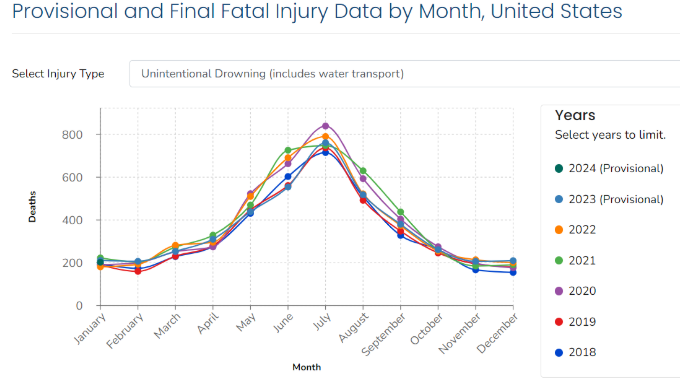
The peak drowning months of June, July, and August may have passed, but the actual risk does not disappear when public pools close and lifeguards go off duty. Changing seasonal conditions create a new landscape of risk that many parents completely miss.
To effectively protect your family, you must understand the environment in Stamford during the off-season. According to mortality tracking from the CDC WISQARS database, over 2,500 unintentional drownings occur nationally outside of the peak summer months every year. Many of these incidents do not involve swimming at all. They are non-swimming, unmonitored falls into water that nobody expected anyone to be near.
The off-season shifts drowning from an active activity risk (swimming) to a passive environmental risk (unmonitored access). During fall and winter gatherings, our guard is naturally down. When hosting a non-swimming gathering, whether it is an autumn barbecue or a simple playdate, supervision around the water, even a covered or closed pool, often drops to zero.
A toddler chasing a leaf, a young child exploring, or a guest navigating a slick deck can fall into an open or poorly secured pool in a heartbeat. Without a dedicated "Water Watcher" (an adult solely focused on the water, without distractions like phones or conversation), a quiet non-swimming fall day can turn catastrophic.
As pool use drops, homeowners frequently slow down on filtering, cleaning, and chemical maintenance. Leaves collect quickly. Murky water, or water with heavy debris, significantly decreases visibility. If a child slips and falls into a murky off-season pool, they cannot be seen, cutting rescue time, seconds that matter most in a water emergency. A pool must remain clear and filtered all winter long.

Autumn and winter bring specific physical hazards to Fairfield County water:
In Stamford, water risks are unique because our geography isn’t limited to backyard pools. Access to the Mianus River, local lakes, retention ponds, and Long Island Sound are often unfenced and completely unmonitored during the non-summer months. Neighborhood play that extends outdoors during the school year frequently brings children dangerously close to these hidden hazards without adult supervision or active lifeguarding.
The most important takeaway for off-season safety is this: You can never "drown-proof" a child, but you can build consistent, life-saving instincts.
Data published in a CDC Vital Signs report confirms that drowning remains the leading cause of accidental injury death for children ages 1 to 4 nationwide. Research demonstrates that formal, structured swim instruction reduces drowning risk among young children by up to 88%.
The danger of pulling kids out of lessons in September is skill regression. Muscle memory, breath control, and water confidence fade during the off-season. When summer returns, those children are not picking up where they left off; they are often spending the first two months relearning skills they had last August.
By maintaining weekly indoor swim lessons through the fall and winter, you accomplish critical goals that casual summer splashing cannot:
As the school year takes priority, we urge all families in the Stamford area to put these basic safety measures into place today:
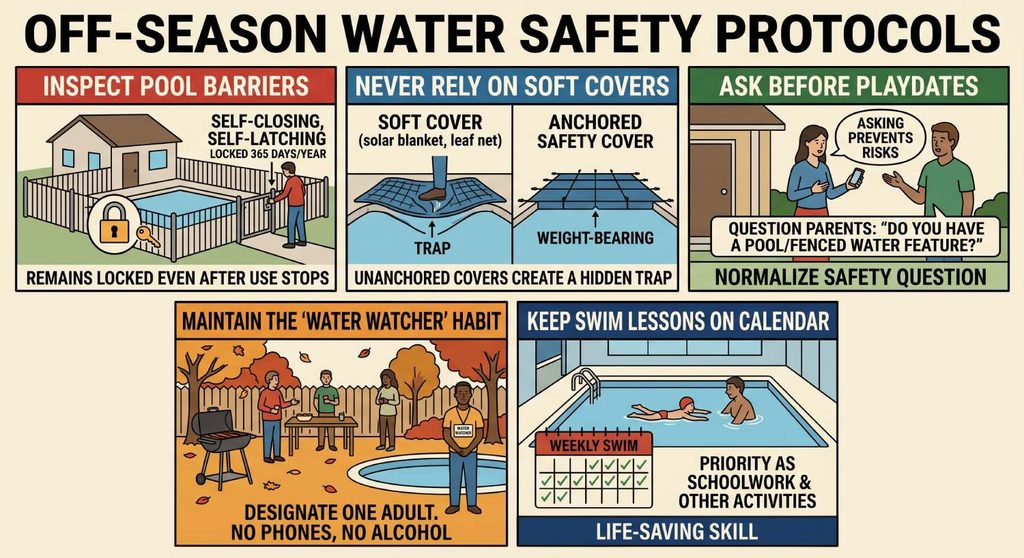
Water safety is not a summer event, and drowning does not take the off-season off. By recognizing the changing hazards of our Stamford environment and prioritizing continuous, formal water education, you provide your family with the layered protection needed to stay safe in every season.
Our dedicated instructors teach year-round indoor swim lessons in a warm, comfortable environment located inside LA Fitness in Stamford, CT.
Ready to get started? Explore our schedules and find the lesson plans that fit your routine on our Pricing & Schedule page, or give our team a call right now at (475) 685-9758.
Hudson Valley Swim - Stamford
LA Fitness
52 6th St.
Stamford, CT 06905
One of the most common questions parents have when signing their child up for swim lessons is simple: Which swim level should I choose?
Age is an important starting point, but it isn't the only thing that matters. Two children of the same age can have very different experiences in the water. One may already be comfortable putting their face underwater and swimming short distances, while another may be entering a structured swim lesson for the first time.
At Hudson Valley Swim Stamford, our swim lesson programs are organized by both age and ability so children can learn alongside swimmers who are working on similar skills. As swimmers become more confident and capable, they can progress through levels that introduce increasingly advanced techniques.
If you're looking for swim lessons in Stamford, CT and trying to determine where your child belongs, here's a closer look at how our swim levels work.
The easiest place to begin is with age.
Hudson Valley Swim Stamford divides children's lessons into three primary age groups:
Within our children's programs, swimmers are further grouped according to their ability.
That second part is important. A 5-year-old who has never taken a swim lesson shouldn't necessarily be in the same class as a 5-year-old who can already swim freestyle and backstroke.
Our different levels allow children to start with skills appropriate for their current ability and continue progressing from there.
Approximate age: 4 months to 2 years
Pollywog is designed to introduce babies and young toddlers to the water in a comfortable, supportive environment.
Parents participate in the water with their child and learn techniques for helping them become comfortable and safe around water. Songs, toys, nursery rhymes, and games help make those early experiences enjoyable while introducing basic aquatic skills.
Pollywog swimmers work on skills such as:
At this age, the goal isn't to have your baby swimming laps. We're beginning the process of helping them develop comfort, familiarity, and foundational skills around the water.
Approximate age: 2 to 3 years
Goldfish continues building on many of the skills introduced in Pollywog.
Parents still remain in the water, but children begin working more directly with their Hudson Valley Swim instructor as their confidence and independence grow.
Goldfish swimmers practice skills such as front and back floats, kicking, blowing bubbles, getting their face wet, holding onto the edge, and climbing from the pool without assistance.
They also begin learning another important skill: sitting on the steps and following directions from their instructor.
Some children around 2.5 years old may already be capable of working independently with an instructor, sitting on the steps, and taking direction. Those swimmers may be ready to move into our Starfish level.
Once children enter our Elementary Program, their swimming ability becomes especially important when determining placement.
Hudson Valley Swim Stamford offers three levels within this age range: Starfish, Lionfish, and Kingfish. Each level builds on the abilities developed before it.
Approximate age: 3 to 6 years
Starfish is our beginner level for children approximately 3 to 6 years old.
Children should be comfortable working directly with an instructor without a parent in the water and capable of following directions while waiting for their turn.
This is where many of the foundational skills younger swimmers have practiced begin developing into more independent swimming.
Starfish swimmers work on:
If your 3, 4, 5, or 6-year-old is new to swim lessons or hasn't yet developed independent swimming skills, Starfish will often be the appropriate place to begin.
Approximate age: 3 to 6 years
Lionfish is the intermediate level of our Elementary Program.
This class is intended for children who have already developed the foundational abilities taught in Starfish and are ready to work more independently on swimming technique.
The focus begins shifting toward proper body position and coordinated movements of the arms and legs.
Skills include:
At this point, children aren't simply becoming comfortable in the water. They're learning how to become more capable swimmers and beginning to develop recognizable swimming strokes.
Approximate age: 5 to 6 years
Kingfish is the advanced level of our Elementary Program and builds directly on the skills learned in Lionfish.
Children entering Kingfish should already have a strong foundation, including freestyle with good side breathing, backstroke, breaststroke fundamentals, and the ability to tread water for 90 seconds.
Swimmers then continue refining those abilities while learning skills such as:
For younger children who have progressed through multiple levels, Kingfish provides an opportunity to continue advancing rather than simply repeating beginner skills because of their age.
This is another question Stamford parents may have when looking for the right swim lessons.
Being older does not mean your child is expected to already know how to swim.
Our Youth Program has beginner, intermediate, and advanced levels specifically for children approximately 7 to 12 years old.
A 9-year-old who has never learned to swim does not need to be placed in a class with much younger children simply because they're a beginner.
Instead, they can begin in Marlin.
Approximate age: 7 to 12 years
Marlin introduces older beginners to foundational swimming skills in an age-appropriate environment.
Swimmers work on becoming comfortable submerging, rhythmic breathing, basic side breathing, front and back streamlines, floating, treading water, and retrieving objects underwater.
They'll also begin developing several swimming strokes, including:
This allows older beginners to develop the fundamentals while learning alongside children closer to their own age.
Approximate age: 7 to 12 years
Once swimmers have developed the basics, Barracuda places greater emphasis on proper technique and stronger swimming.
Students work on continuous side breathing for freestyle, backstroke, properly timed breaststroke, introductory butterfly, and drills designed to improve each stroke.
Additional skills include:
The emphasis gradually moves from simply being able to perform a swimming skill toward performing it with better technique and control.
Approximate age: 7 to 12 years
Shark is our advanced Youth level.
At this stage, swimmers continue refining their stroke technique while increasing the distances they're capable of swimming.
Students develop a deeper understanding of all four competitive strokes:
They also begin working on appropriate turns, longer-distance swimming, and the fundamentals of interval training.
For children who love swimming and want to continue challenging themselves, Shark helps bridge the gap between learning how to swim and developing more advanced swimming ability.
Choosing the right starting level is only part of the process. Parents also naturally want to know when their swimmer is ready for the next one.
At Hudson Valley Swim Stamford, moving up isn't simply based on completing one session.
Each level includes a series of skills that swimmers need time to learn and master. It's common for a child to repeat a level as they continue developing those abilities. Every swimmer progresses differently, so some children may be ready sooner while others benefit from additional practice.
Your child's instructor can help determine when they're ready to take the next step.
That takes some of the pressure off parents. You don't need to stand on the pool deck with a checklist trying to decide whether your child's backstroke is good enough for the next class.
The goal isn't to move through the levels as quickly as possible. It's to make sure swimmers have the foundation they need before advancing to more challenging skills.
Age gives us a starting point, but swimming experience, confidence, independence, and existing skills all help determine the appropriate level.
And don't worry if your child isn't at exactly the same point as every other swimmer in the class.
It's normal for some students to be relatively new to a level while others are continuing to work toward mastering its remaining skills. Our instructors can work with swimmers at different stages while keeping the class focused on the abilities associated with that level.
What matters most is that your child is in an environment where they can continue learning without being overwhelmed or held back.
For Stamford families, developing strong swimming skills can also help children feel more comfortable when opportunities for pools, beaches, boating, vacations, and time around Long Island Sound come along.
Swimming isn't a race from one level to the next.
A swimmer may pick up kicking quickly but need more time with side breathing. Another child might be comfortable underwater but still be developing the coordination needed to combine their arms and legs. That's normal.
At Hudson Valley Swim Stamford, our goal is to place swimmers in an environment where they can continue building confidence, improving their technique, and developing the skills they need to become stronger swimmers.
If you're ready to get started, explore our swim lesson programs and discover how Hudson Valley Swim Stamford can help you find the right class for your child's age and ability. From a baby's first introduction to the water to advanced stroke development, there's a level designed to help your swimmer take their next step.
As summer winds down and the school year begins, many Stamford families start changing their routines. Vacations come to an end, outdoor pools begin closing, and attention shifts toward school, homework, and after-school activities.
For some families, swim lessons are one of the first activities to come off the calendar.
It's easy to understand why. Swimming is often associated with summer days at the pool, trips to the beach, and time spent along Long Island Sound. But while summer may be when children have the most opportunities to use their swimming skills, it doesn't have to be the only time they develop them.
At Hudson Valley Swim Stamford, we encourage families to think of swimming as a year-round skill. Continuing lessons through the fall and winter can help children maintain the progress they've already made, continue building confidence, stay active, and enter next summer as stronger swimmers.
Here are seven reasons to keep swimming after summer ends.
Learning to swim is similar to learning any other physical skill. Progress comes through repetition.
During regular lessons, children have opportunities to practice floating, kicking, breathing, stroke mechanics, treading water, and other skills appropriate for their current level. Over time, movements that once required a lot of concentration begin to feel more natural.
Taking several months away from the pool can interrupt that momentum.
That doesn't mean a child will suddenly forget how to swim. However, after an extended break, some swimmers may need time to rebuild their comfort, endurance, coordination, or technique before moving forward again.
Continuing swim lessons throughout the fall gives children an opportunity to build on what they've already accomplished rather than repeatedly stopping and restarting their progress.
Summer might be swimming season, but fall and winter can be learning season.
Think about where you would like your child to be by next summer.
Maybe they're currently learning to float independently. Perhaps they're beginning to combine their arms and legs, working on side breathing, or trying to swim longer distances without assistance.
Several months of continued lessons can provide a lot of opportunities for growth.
At Hudson Valley Swim Stamford, our curriculum is designed so swimmers build on previously learned skills as they progress. A child might begin with blowing bubbles, floating, and kicking before eventually developing freestyle, backstroke, breaststroke, butterfly, treading water, diving, and greater swimming endurance.
When lessons continue throughout the year, there is time to make that progression gradually.
Instead of returning to the pool next spring and spending the first few lessons getting comfortable again, your child can arrive at summer ready to use the skills they've been developing all year.
Once school begins, families often start looking for activities that give children something productive to do outside the classroom.
Swim lessons can fit naturally into an after-school routine.
Children spend much of their school day sitting, concentrating, and learning. Getting into the pool gives them an opportunity to move their bodies, work toward new goals, and focus on something completely different from their schoolwork.
Regular swim lessons can provide:
Children don't have to be competitive swimmers for swimming to become a meaningful part of their weekly routine. For Stamford families, lessons can provide a healthy after-school activity that combines exercise with practical skill development.
As temperatures begin to drop in Fairfield County, many of the outdoor activities children enjoy during the summer become less practical.
Swimming doesn't have to be one of them.
Indoor swim lessons give children a way to remain physically active even when colder temperatures and shorter days mean more time spent indoors.
Rather than waiting for warm weather to return, children can continue swimming throughout the fall and winter while developing their technique, endurance, and confidence.
A regular swim lesson also provides something active to look forward to during the colder months and helps keep physical activity part of the family's weekly routine.
Hudson Valley Swim Stamford's lesson programs are designed around progression.
Our younger swimmers may begin by learning skills such as blowing bubbles, getting their faces wet, floating, kicking, holding onto the wall, and safely climbing out of the pool.
As they progress, those foundational skills lead into more advanced abilities such as freestyle, side breathing, backstroke, breaststroke, butterfly, treading water, diving, and swimming longer distances.
Each stage builds on skills developed earlier.
That's why consistency can be so valuable. Regular lessons give swimmers repeated opportunities to practice what they're learning while gradually adding new challenges as they're ready.
Progress isn't always dramatic from one lesson to the next. Sometimes the biggest improvements happen after weeks of repetition when something that once felt difficult suddenly clicks.
Keeping that routine going throughout the fall and winter gives those breakthroughs more opportunities to happen.
Outdoor pools may close and beach days around Long Island Sound may become less frequent, but opportunities to be around water don't disappear once summer ends.
Stamford families may travel during school breaks, stay at hotels, take cruises, visit indoor pools, or vacation somewhere warmer during the winter. Before long, another Connecticut summer filled with pools, beaches, boating, and other water activities will arrive.
That's why water safety shouldn't be treated as something children only practice during the summer.
Skills like floating, treading water, safely returning to the wall, and understanding personal swimming limits remain valuable regardless of the season.
Swim lessons give children regular opportunities to strengthen those skills while becoming more confident and capable around water.
Not every child feels immediately comfortable in the water.
For hesitant swimmers, summer can sometimes create additional pressure. There may be an upcoming vacation, pool party, summer camp, or family beach trip where everyone wants them to swim.
Fall and winter offer something valuable: time.
Instead of feeling like they need to become comfortable before the next pool day, children can work at their own pace.
Over several months, a hesitant swimmer may gradually become comfortable putting their face in the water, blowing bubbles, floating, kicking, submerging, and eventually swimming independently.
Those small victories add up.
By the time summer returns, a child who once avoided the water may approach the pool or beach with an entirely different level of confidence.
Swimming may be one of summer's favorite activities, but learning to swim doesn't need to be seasonal.
For Stamford families, fall and winter provide months of valuable time to maintain the progress children have already made, develop new skills, stay active, and build confidence before warm weather returns.
If your child made progress this summer, continuing lessons can help keep that momentum going. If they're just getting started, enrolling during the fall gives them months to develop their swimming ability before next summer arrives.
At Hudson Valley Swim Stamford, our swim lesson programs are designed to help swimmers progress at their own pace while developing skills they can use for a lifetime.
Don't wait until the first pool or beach day of next summer to start thinking about swimming again. Explore our swim lesson programs and discover how Hudson Valley Swim Stamford can help your child keep learning, growing, and building confidence throughout the fall, winter, and beyond.
Click the button below, then fill out the form to be contacted.