When the calendar turns to September, many families pack away the goggles, roll up the beach towels, and transition mentally into back-to-school mode. The yellow buses are running, after-school schedules are filling up, and the seasonal urge to think about water safety vanishes. It feels natural to assume that once summer ends, the risk of drowning goes away with it.
That assumption, while completely understandable, is one of the most dangerous myths in child safety.
Every year, public safety messaging focuses heavily on the summer months. It makes sense on the surface: June, July, and August traditionally see the highest concentration of water activities and, predictably, the highest total volume of water-related incidents. However, viewing drowning strictly as a summer problem creates a false sense of security that puts children at risk during the fall, winter, and spring.
In reality, water hazards do not close down when the local outdoor public pool drains its water or when lifeguards stop actively monitoring popular swim spots. In fact, changing weather patterns, vacations, shifting family routines, and off-season backyard environments create a brand-new set of risks that many parents never see coming.
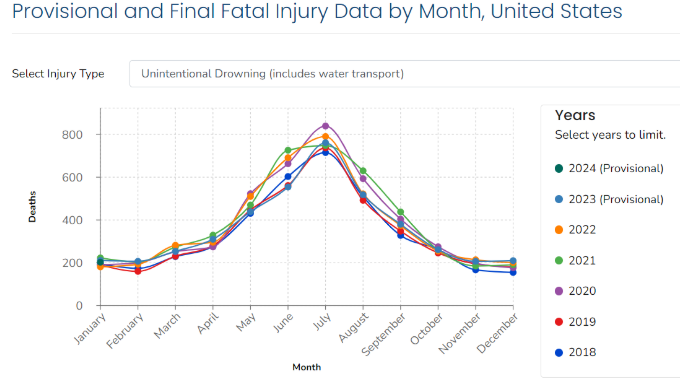
To understand why off-season drowning happens, it helps to look at how our environment and daily routines change after Labor Day. According to mortality tracking from the CDC WISQARS database, over 2,500 unintentional drowning deaths occur outside of the peak summer months each year in the United States. Nearly 19% of all annual drownings happen during September, October, and November alone.
Those numbers might seem surprising if you picture drowning as something that only happens when a child is actively swimming at a crowded beach. Off-season water accidents rarely involve a child intentionally jumping into a pool or river to go for a swim. Instead, they happen when nobody expects anyone to be near the water at all.
In many parts of the country, summer heat stretches much further into the autumn months than it used to. High temperatures often linger through October and even into late autumn, leading homeowners to leave their backyard pools open and uncovered far longer into the year.
The problem arises because family routines have already shifted. During July, a parent sitting on the patio, is actively watching the pool because the kids are in swimsuits. In October, that same parent might be doing yard work, raking leaves, or hosting a casual gathering. The pool remains uncovered, but active adult supervision has dropped to zero because "nobody is swimming today."
A wandering toddler chasing a ball or running across a slick deck can fall into an open pool, lake, or pond, in a fraction of a second. Without a dedicated watcher or a secured pool fence, any body of water is a constant, unmonitored hazard.
As pool usage drops off in the autumn, home pool maintenance often slows down as well. Filters run less frequently, chemical levels drop, and fallen leaves begin to collect at the bottom of the water.
This creates a severe secondary risk: reduced water clarity. If a child slips and falls into a murky, leaf-filled pool, they become invisible from the surface almost instantly. Seconds matter in a water emergency, and poor water clarity drastically cuts down the chance of a quick rescue.
Another important factor to keep in mind, if someone falls into the water during the Fall, far less people are going to be around that body of water as swimmers and professional lifeguards are far less likely to be around during that time. No matter whether you were intending to swim or not, ending up in the water unprepared is a recipe for disaster, especially when no one is around to help you.

Autumn brings specific physical hazards around bodies of water:
Back-to-school season brings new friends, new classmates, and invitations to new houses. Parents frequently send their kids on playdates or after-school hangouts without realizing the host family has an unsecured pool, a backyard koi pond, a hot tub, or an un-fenced creek behind the property.
When children visit an unfamiliar home, curiosity is high and spatial boundaries aren't established yet. Combined with the distraction of parents catching up inside or working from home, non-swimming accidents can happen quickly during casual indoor-outdoor play.
Preventing off-season accidents requires a two-pronged approach: maintaining physical barriers at home and ensuring your child possesses muscle memory in the water.
According to data published in a CDC Vital Signs report, drowning remains the leading cause of unintentional injury death for children ages 1 through 4 in the United States, and the second leading cause for kids up to age 14. Yet, research shows that participating in formal, structured swim lessons reduces the risk of drowning by up to 88% among young children (source).
The word to focus on is formal. Casual summer splashing builds familiarity, but it does not automatically build life-saving self-rescue skills.
When families pull their kids out of swim lessons in September, a noticeable regression occurs over the next eight to nine months. Muscle memory fades, breath control weakens, and water confidence drops. When summer returns, these children often spend the first two months just trying to regain the comfort level they had the previous August.
By keeping children enrolled in indoor swim lessons through the fall and winter, parents accomplish three vital goals:
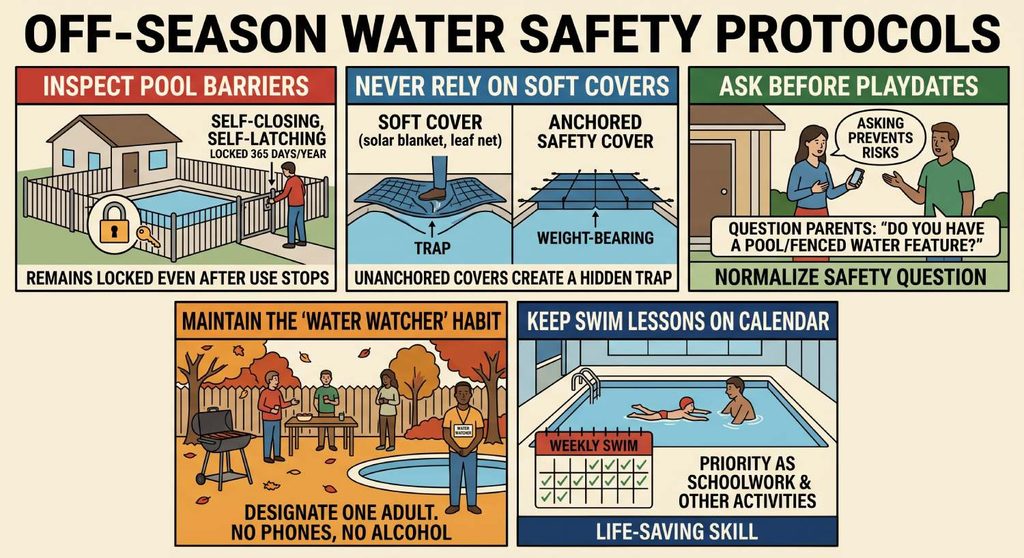
To protect your children as the school year gets into full swing, put these basic off-season safety measures into practice today:
Water safety is not a seasonal event, and drowning does not take the autumn off. By recognizing the unique hazards of the shoulder months and prioritizing continuous, year-round water education, you can ensure your family stays safe in every season.
If you want to learn more about swimming lessons, please visit https://hvswim.com/find-a-location/ to find the swimming school nearest you. We have locations all over the United States that are passionate about water safety.