Choosing a swim school is about more than finding the closest pool or the most convenient class time. Instructor experience, teaching techniques, class size, hidden costs, available programs, and the overall learning environment can all affect how a swimmer feels in the water and how steadily they progress.
Many large swim school chains operate dedicated, highly branded facilities with standardized teaching systems designed primarily for young children where instructor experience is not critical. These programs may offer colorful surroundings, consistent lesson formats, and a recognizable experience across multiple locations.
Hudson Valley Swim takes a different approach. By offering lessons in established partner pools and prioritizing experienced instructors, small classes, skill-based activities, and measurable development, Hudson Valley Swim creates an environment where swimmers of different ages and abilities can enjoy their lessons while making meaningful progress.
Both approaches can teach important swimming and water-safety skills, but the experiences and results they provide may be very different. The right choice depends on the swimmer’s personality, the family’s goals, and the type of environment in which that individual learns most effectively.
One of the most noticeable differences between swim schools is the environment surrounding the lesson.
Many large swim school chains operate dedicated aquatic centers designed specifically for children. These facilities may include colorful decorations, branded characters, family changing areas, and a busy, energetic atmosphere. Many classes may take place in small roped-off sections of the pool at the same time, with noise from many instructors teaching, children splashing, and families moving throughout the facility.
Some children are unaffected by this level of activity. Others may find it difficult to hear instructions, maintain focus, or become comfortable with an unfamiliar skill when there is considerable movement and sensory input around them.
Hudson Valley Swim typically offers lessons in established partner pools inside community centers, health clubs, hotels, schools, and similar facilities. Although every partner pool is different, these locations often provide a more streamlined atmosphere with fewer visual and audible distractions surrounding the lesson.
A focused environment does not mean lessons are overly serious or rigid. Hudson Valley Swim instructors use encouragement, games, toys, and positive interaction to keep swimmers engaged. The fun takes place within the lesson itself and supports what the swimmer is learning.
This type of environment may be especially helpful for:
The goal is to create an environment where swimmers can enjoy being in the water, connect with their instructor, and concentrate on developing new skills.
A knowledgeable and encouraging instructor can have a major influence on how a swimmer feels about the water.
Many national swim school chains use standardized training systems to create a consistent teaching structure across their locations. This can make it possible to prepare instructors to deliver a defined curriculum using established lesson plans and activities.
Hudson Valley Swim differentiates itself by emphasizing experienced instructors who typically bring at least three years of swim-instruction experience. Instructors may also have backgrounds in competitive swimming, coaching, education, or aquatic safety. Many hold lifeguard, Water Safety Instructor, First Aid, CPR, AED, and other relevant certifications.
Hudson Valley Swim instructors also complete training in the company’s proprietary curriculum. This includes online learning, co-teaching, and supervised instruction until they demonstrate proficiency. Training continues through in-service sessions and additional courses as new educational materials become available.
This combination of prior experience and continued training helps instructors understand that swimmers do not all respond to the same teaching style.
One child may need reassurance before attempting a new skill, while another may need a greater challenge to remain engaged. A swimmer may understand a technique immediately, or they may need to see and practice it in several different ways.
Senior-level coaching helps instructors:
Hudson Valley Swim instructors combine patience, encouragement, and purposeful coaching. Swimmers receive support while also being challenged to develop the skills needed to become safer, stronger, and more independent in the water.
Instructor continuity is another factor families may want to consider.
At some swim schools, instructors are trained primarily to teach specific ages or beginner levels. A swimmer may need to change instructors as they progress into more advanced classes.
Hudson Valley Swim’s emphasis on experienced instructors allows coaches to teach all skill levels. Students are able to continue with an instructor they already know as they advance from beginner skills into intermediate and advanced swimming.
Keeping the same instructor can help preserve:
This continuity may be especially valuable for nervous swimmers, students with special needs, and individuals who need time to become comfortable with a new instructor.
Swimmers are more likely to participate, practice, and return when lessons are positive and enjoyable. Hudson Valley Swim believes that having fun and making progress should work together.
Many swim schools incorporate guided play, games, and positive reinforcement to help children become more comfortable in the water. The important question is how closely those activities connect to the skills being taught.
Hudson Valley Swim uses games, sinking tools, floating mats, skills-based songs for infant and toddler classes, and interactive activities throughout its group levels. These activities are selected to reinforce the techniques swimmers are working to master.
Depending on the class level, an activity may help swimmers practice:
For example, retrieving a dive ring can help a swimmer practice submersion and breath control. Moving under a floating mat can build confidence while reinforcing body position and independent movement. Songs and repetition can help infants and toddlers become familiar with new movements in the water.
These activities make lessons engaging, but they are not simply used to fill class time. Each activity supports water safety, swimming development, or confidence.
A small student-to-instructor ratio is important, but families should also consider what swimmers do throughout the entire class.
Hudson Valley Swim’s group lessons are designed to keep students participating throughout the lesson.
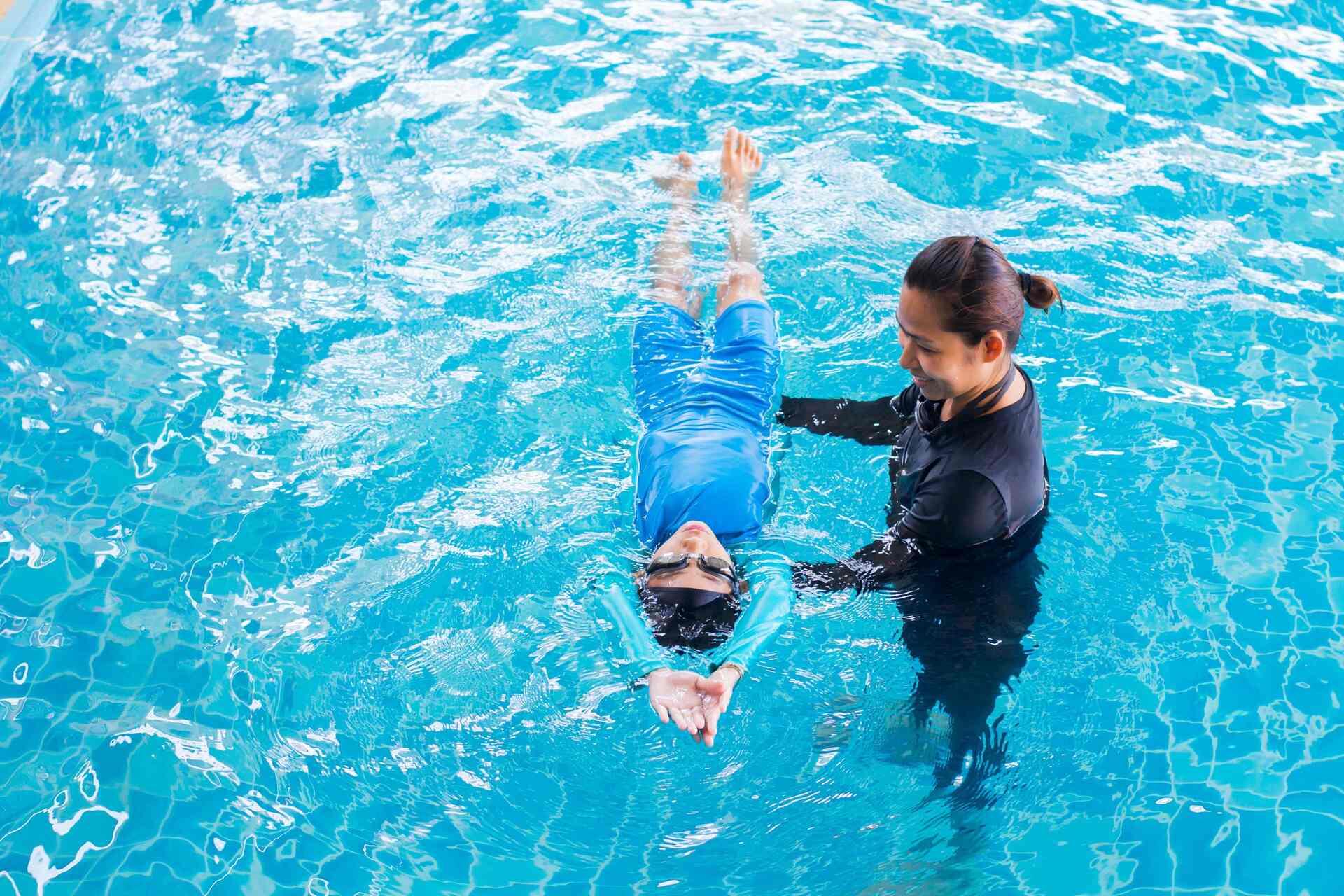
In a typical 30-minute class, the instructor works directly with each swimmer while keeping the rest of the group involved in level-appropriate practice. Depending on their abilities, swimmers may work on breathing, kicking, floating positions, arm movements, breathing patterns, or other skills from the platform or pool wall while another student receives one-on-one attention.
This structure gives swimmers opportunities to repeat important movements instead of passively waiting for their next turn.
The instructor can also observe how each swimmer responds and adjust the lesson accordingly. When a child is ready for a greater challenge, the instructor can introduce a new variation. When a swimmer needs additional support, the activity can be simplified without separating them from the rest of the class.
The result is a lesson that remains positive and active while still providing individualized attention.
Many swim schools advertise small group classes, with beginner and youth classes commonly using student-to-instructor ratios of up to 4:1. Infant classes may accommodate additional students because a parent or caregiver remains in the water with each swimmer.
A small class does not automatically guarantee the same experience at every swim school.
Families should also consider:
Hudson Valley Swim uses small classes to provide individualized feedback within a supportive group environment. Instructors can observe each swimmer closely, correct technique, adjust activities, and help students work toward appropriate goals.
Private, semi-private, and small-group private options may also be available for swimmers who need more concentrated instruction or want to learn alongside family members or friends.
Many large swim school chains focus primarily on infants and children, often serving swimmers from approximately 4 months through age 12.
Hudson Valley Swim provides instruction across a broader age range. Depending on the location, available programs may include:
This broader program structure allows swimmers to continue developing without outgrowing the swim school.
A toddler can begin building comfort in the water alongside a parent, progress into independent elementary and youth classes, and eventually work on advanced or competitive strokes. Teenagers can improve their technique or prepare for team swimming. Adults can learn foundational skills, refine their strokes, or overcome a longstanding fear of the water.
Families may also be able to enroll swimmers of different ages through the same program instead of finding a new swim school as their needs change.
Some swimmers benefit from private instruction, flexible pacing, or lessons adapted to their sensory, behavioral, physical, or communication needs.
Adaptive programs vary considerably among swim schools. Some offer modified group lessons, while others provide one-on-one instruction. Availability may also depend on the individual location and the instructors currently on staff.
Hudson Valley Swim offers dedicated one-on-one adaptive lessons at all locations. Besides the training Hudson Valley Swim coaches complete, many also have completed additional training through Swim Angelfish® and hold the Adaptive Swim Whisperers® certification.
Depending on the swimmer, an instructor may adjust:
Private adaptive instruction gives swimmers space to build confidence and enjoy the water without being expected to follow the pace of a conventional group class. It also allows the instructor to develop engaging activities around the swimmer’s interests, abilities, and comfort level.
Program availability and instructor certifications vary, so families should speak with their nearest Hudson Valley Swim location about the support available for their swimmer.
Some swimmers want to continue beyond foundational water safety and recreational swimming.
Advanced programs vary among swim schools. Some child-focused chains offer introductory swim-team programs, while other schools provide stroke-development classes or competitive clinics.
Participating Hudson Valley Swim locations offer competitive swimming clinics for swimmers who are ready to improve their technique, efficiency, and endurance.
Depending on the swimmer’s level, advanced instruction may cover:
Families with an advanced swimmer should ask whether the program provides a clear progression beyond basic independent swimming and whether instructors have the experience to identify and correct technical issues.
Swim lesson pricing and enrollment structures vary by school and location.
Many large swim school chains use ongoing monthly enrollment. Some also charge annual registration or membership fees in addition to lesson tuition. Some require students to purchase a swim “uniform” such as a colored swim cap which may change as they progress through levels. Other programs may offer prepaid packages, sibling discounts, or discounted rates for multiple weekly lessons.
Hudson Valley Swim tuition may be billed monthly or by session, depending on the location. Because Hudson Valley Swim uses established partner pools rather than constructing large standalone aquatic centers, it operates with a different facility model.
Hudson Valley Swim does not charge an annual membership fee, allowing families to focus their investment on instruction. Hudson Valley Swim also does not require students to purchase specific equipment such as goggles or a swim cap from us. Students can bring their own.
When comparing swim lesson costs, families should consider more than the advertised price of one class. Other factors include:
A lower advertised lesson price may not represent the lowest total cost once fees and enrollment commitments are included. Families should request a complete explanation of tuition and policies before registering.
Current tuition, enrollment formats, and class availability can be found through the nearest Hudson Valley Swim location.
| Feature | Hudson Valley Swim | Typical Large Swim School Chain |
| Facility model | Partner pools in fitness centers, health clubs, hotels, schools, and similar facilities | Dedicated, branded indoor aquatic centers |
| Typical atmosphere | Welcoming, engaging, and focused | Highly themed, colorful, and often energetic |
| Instructor approach | Emphasis on experienced instructors, individualized feedback, and measurable progress | Standardized instructor training based on a franchise-wide curriculum |
| Instructor continuity | Experienced instructors may teach swimmers across multiple skill levels | Swimmers may change instructors as their age or level changes |
| Group class size | Up to 4:1 for many youth levels; up to six parent-child pairs | Small group ratios are common but vary by company and level |
| Teaching style | Enjoyable activities connected to water safety, confidence, and skill progression | Often incorporates branded games, guided play, and positive reinforcement |
| Age range | Infants beginning at 4 months through teens and adults | Frequently centered on infants and children |
| Adaptive instruction | Dedicated one-on-one lessons; Swim Angelfish-trained coaches available at select locations | Adaptive options vary by company and location |
| Competitive development | Competitive clinics available at participating locations | Advanced youth programs vary by company and location |
| Pricing | Varies by location and enrollment format | Varies by company, location, and enrollment package |
| Annual membership fee | No annual membership fee | Registration or membership fees may apply |
Program availability, enrollment structure, instructor credentials, class ratios, and facility features vary by location. Families should verify current details directly with each swim school they are considering.
A large swim school chain may appeal to families looking for a dedicated aquatic center, extensive child-focused branding, or a standardized experience across multiple locations.
Hudson Valley Swim is designed for families who want lessons to be both enjoyable and productive. Classes incorporate games, encouragement, and positive interaction while keeping activities connected to water safety, confidence, and swimming development.
Hudson Valley Swim may be a strong fit for families seeking:
The best swim lessons should not force families to choose between having fun and making progress. Hudson Valley Swim brings both together by creating a positive experience that keeps swimmers engaged while helping them become safer, more capable, and more confident in the water.
The best way to evaluate a swim school is to experience a lesson firsthand.
Contact your nearest Hudson Valley Swim location to ask about available classes, current tuition, and free trial lesson opportunities.
A trial lesson gives you the chance to meet the instructors, experience the pool environment, and see how Hudson Valley Swim makes learning enjoyable while helping swimmers build skills that can last a lifetime.