
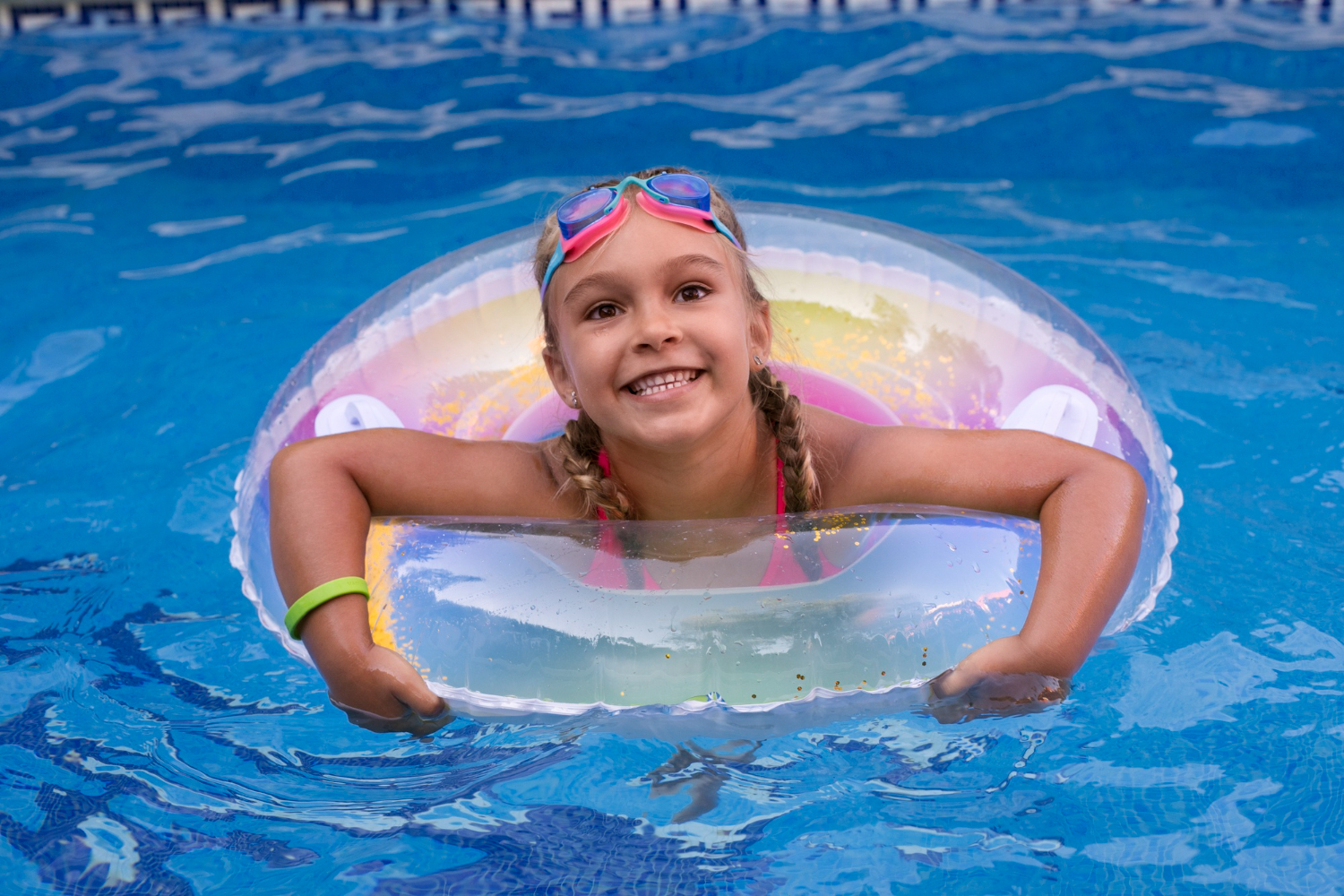
When someone asks, “Does your child know how to swim?” many parents answer yes if their child can paddle across a pool, jump into the water, or return to the wall.
Those are meaningful accomplishments, but they do not always mean a child is prepared to handle an unexpected situation in the water.
Can your child float or tread water for an extended period? Can they swim comfortably with their face in the water? Could they recover after an unexpected entry? Can they reach the side and climb out while wearing clothes and shoes? Do they understand important safety rules around pools, lakes, and boats?
These questions provide a more complete picture of a child’s abilities.
For families in Tyler, water safety is especially relevant. Children may spend time in backyard pools, community pools, waterparks, or nearby lakes such as Lake Tyler and Lake Palestine. Each environment presents different challenges, which is why the goal of swim lessons at Hudson Valley Swim Tyler is not simply to help children move through the water. It is to help them develop the skills, confidence, endurance, and judgment needed to become safer, more capable swimmers.
Swimming ability is not a simple yes-or-no question.
A child may be able to swim several feet in a familiar pool but struggle when:
True water-safety competence involves more than completing one successful trip across a pool. It requires a combination of physical skills, decision-making, endurance, breath control, and the ability to remain calm when conditions change.
That is why parents should look beyond whether their child can simply “swim.” A better question is: How prepared is my child to respond when something unexpected happens in or around the water?
Basic swimming ability might mean a child can kick, paddle, or move through the water for a short distance. Water-safety competence is broader.
The American Academy of Pediatrics describes water competency as the ability to anticipate, avoid, and survive common drowning situations. This includes the ability to enter the water, return to the surface, turn around, move through the water, float or tread water, and exit safely. The organization also recommends that children learn swimming and water-safety skills from trained instructors.
A child does not need to swim every stroke perfectly to begin becoming safer. However, they should gradually develop a range of skills they can use together.
Here are nine questions parents can ask when evaluating their child’s current swimming ability.
Unexpected water entry is different from a planned jump during a lesson.
A child who slips from a pool step, falls from a dock, or enters deeper water unexpectedly may become disoriented. They need to know how to:
Practicing safe entries and recovery skills helps children learn that getting into the water is only the first part of the process. They must also be able to recover and decide what to do next.
For newer swimmers, these foundational skills are introduced gradually through the Hudson Valley Swim Tyler elementary program, where instructors help children become more comfortable and capable in the water.
Floating is one of the most valuable skills a swimmer can develop.
If a child becomes tired, floating may give them an opportunity to rest, breathe, and regain control before continuing toward safety. It can also reduce panic by showing the swimmer that the water can support their body when they use the proper position.
A child should work toward being able to:
Floating requires practice because body position, breathing, and relaxation all work together. Hudson Valley Swim begins building comfort, buoyancy, and early water-safety habits through its infant and toddler swim program in Tyler.
Treading water allows a swimmer to remain upright with their head above the surface. It is especially valuable when the swimmer cannot immediately reach a wall, shoreline, or stable object.
Parents should consider not only whether their child can tread water, but how long they can do it while staying calm and maintaining control.
Effective treading requires:
This skill becomes increasingly important as children grow and begin participating in boating, lake activities, water sports, and recreational swimming in deeper water.
The youth swim program at Hudson Valley Swim Tyler helps swimmers develop stronger technique, endurance, and water-safety skills as their abilities progress.
Breath control affects nearly every part of swimming.
A child who lifts their head suddenly, holds their breath too long, or inhales when water reaches their face can become frightened and lose their body position. Learning to exhale underwater and inhale at the appropriate time helps a swimmer remain calmer and move more efficiently.
A water-competent swimmer should gradually learn how to:
Breath control is not about seeing how long a child can hold their breath underwater. It is about helping them breathe safely, rhythmically, and confidently while swimming.
Children who experience strong anxiety, sensory challenges, or difficulty progressing in a group setting may benefit from private lessons and special-needs swim instruction. Individualized instruction allows the coach to adapt the pace and teaching approach to the swimmer.
Moving through the water is most useful when a swimmer can direct that movement toward safety.
A child should learn to identify the nearest safe destination, turn toward it, and continue swimming until they can establish a secure hold. That destination might be:
This requires more than forward movement. The child must be able to look around, make a decision, change direction, and keep swimming even if they are tired or frightened.
Practicing these skills in lessons helps children connect swimming technique with a practical purpose.
Reaching the side does not always mean the swimmer is safe.
A child may still need to pull their body out of the water, climb onto a dock, use a ladder, or remain securely attached to the wall until help arrives. Exiting becomes more difficult when a swimmer is tired or wearing wet clothes and shoes.
Children should practice:
Exit practice helps complete the water-safety sequence. A swimmer enters or falls into the water, recovers, moves toward safety, establishes a secure hold, and gets out.
Some children appear confident while standing in shallow water but become anxious as soon as their feet leave the floor.
That response matters because panic can interfere with breathing, body position, and decision-making. A child who relies on touching the bottom may not yet be comfortable enough to use their swimming skills in deeper water.
A swimmer should gradually learn to:
Confidence should come from practiced skills, not from assuming nothing will go wrong. Calm, progressive instruction gives swimmers opportunities to experience deeper water while building the techniques needed to manage it.
Goggles and flotation devices can be useful tools, but children should not become completely dependent on them.
If a child falls into the water unexpectedly, they may not be wearing goggles. They need to know how to open their eyes when necessary, tolerate water on their face, and continue moving toward safety.
Similarly, water wings, inflatable rings, and other recreational flotation products can create a false sense of security. They may slip off, deflate, or place a child in an unsafe body position. Even a properly fitted life jacket does not replace supervision or swimming ability.
Children should have opportunities to practice appropriate skills:
Swimming in clothes is significantly more difficult than swimming in a swimsuit. Wet fabric and shoes create drag and additional weight. Controlled practice can help experienced swimmers understand how these conditions affect movement and energy use.
Physical swimming skills are only one part of water safety.
Children also need to understand how to make safer choices around water. Depending on their age, they should know rules such as:
Children should also learn that swimming conditions can change. A swimmer who is comfortable in a warm indoor pool may not be ready for Lake Tyler, Lake Palestine, or another open-water environment.
Recognizing personal limits is a critical safety skill. Strong swimmers still need supervision, appropriate equipment, and good judgment.
A child does not need to master every competitive stroke before becoming safer in the water. However, learning multiple strokes and movement patterns gives the swimmer more options.
Freestyle can help a swimmer move efficiently toward safety. Backstroke allows the swimmer to breathe more freely while continuing to make progress. Breaststroke may help with visibility and controlled movement.
Elementary backstroke is also a crucial safety stroke. It allows swimmers to remain on their backs, keep their faces out of the water, rest, and propel themselves without using as much energy as some other strokes.
Learning different strokes also helps swimmers improve:
As children become more advanced, the competition clinics at Hudson Valley Swim Tyler can help refine stroke mechanics, starts, turns, and overall swimming efficiency. These skills support competitive goals while also helping swimmers move through the water with greater control.
Children often perform best in environments they know well.
They may be comfortable in a warm pool where they can see the bottom, know the depth, and expect an instructor or parent to be nearby. That confidence is valuable, but it does not automatically transfer to every aquatic setting.
Open water can introduce:
Lakes near Tyler can look calm while still presenting conditions that are very different from a swimming pool. Children should be taught that being successful in lessons does not give them permission to swim without supervision or ignore the rules of a new environment.
The goal is not to make children afraid of water. It is to help them enjoy it with a realistic understanding of their abilities and surroundings.
Endurance is an important part of water-safety competence.
A child may demonstrate good technique for a short distance but struggle to continue swimming, floating, or treading water. If the wall or shoreline is farther away than expected, fatigue can quickly become a serious problem.
Endurance should be developed gradually through:
Efficient technique matters because it helps swimmers conserve energy. A child who fights the water with rushed movements may tire much more quickly than a swimmer who maintains balance, rhythm, and controlled breathing.
Swim lessons should help children build both the ability to perform a skill and the stamina to use it when needed.
The Hudson Valley Swim curriculum is designed to help swimmers progress from early water comfort to stronger technique and endurance.
Depending on the swimmer’s age and current ability, instruction may include:
Skills are introduced progressively so swimmers can build on what they have already learned. Instructors can also provide individualized feedback within the class, helping each swimmer address specific challenges rather than simply completing the same activity as everyone else.
Across the swim programs offered at Hudson Valley Swim Tyler, the objective is to help children become confident and comfortable while continuing to develop measurable swimming and water-safety abilities.
Fun remains an important part of that process. Children are more willing to practice, take appropriate challenges, and return to lessons when learning is encouraging and engaging. Enjoyment and skill development are not opposing goals. A well-structured lesson uses both to support long-term progress.
Swimming lessons can reduce risk and provide children with essential skills, but they cannot eliminate the possibility of drowning.
No child or adult is drown-proof.
The Centers for Disease Control and Prevention recommends multiple layers of drowning prevention. Families should combine swim instruction with:
Adults should avoid assuming that a child is safe simply because the child has completed swim lessons. Skills need continued practice, and supervision remains essential at every stage.
Instead of asking only, “Can my child swim?” consider asking:
The answers can help identify which abilities are already strong and which ones need additional practice.
A child does not need to be a perfect swimmer. Water-safety competence develops over time through quality instruction, repetition, increasing endurance, and experience in age-appropriate situations.
Whether your child is entering the water for the first time, building foundational safety skills, refining their strokes, or preparing for competitive swimming, the next step should match their current ability.
Use the Hudson Valley Swim Tyler level finder to identify an appropriate starting point, then explore the available swim classes in Tyler, Texas.
Hudson Valley Swim Tyler helps children become safer, stronger, and more capable swimmers so they can enjoy the water with greater confidence while understanding how to respect it.

Build water safety skills, confidence, and consistency this fall so your swimmer is ready for next summer's adventures.
8 Weeks of Lessons • Indoor Heated Pool
Classes Begin October 25
