Finding the right swim school in St. Johns county involves more than choosing the closest pool or the most colorful facility. The environment, instructors, class structure, teaching approach, and available programs can all affect how comfortable a swimmer feels and how consistently they progress.
Some swim schools operate large, highly themed aquatic centers designed primarily for young children. Others use established community, fitness, or hotel pools to provide a more focused lesson environment. Both models can introduce swimmers to the water, but the experience may be very different.
Hudson Valley Swim Saint Johns, located in St. Augustine, offers small-group and private swim lessons for infants, children, teens, and adults. If you are comparing swim schools in St. Johns or elsewhere in St. Johns County, here are the most important factors to consider.
The pool environment can have a significant effect on a swimmer’s ability to listen, participate, and feel comfortable.
Large swim school chains often operate dedicated facilities with colorful decorations, music, several simultaneous classes, and busy pool decks. Some swimmers respond well to that energy. Others can become distracted or overwhelmed by the noise, movement, and visual stimulation.
Hudson Valley Swim Saint Johns teaches inside the indoor pool at the Holiday Inn Express & Suites St. Augustine North. The setting offers a more focused environment without sacrificing enjoyment or encouragement.
A less hectic pool deck can be particularly helpful for:
The best environment is one where the swimmer can have fun while remaining engaged with the instructor and the skills being taught.
An appealing facility may attract a family’s attention, but the instructor usually has the greatest influence on the swimmer’s experience.
When comparing St. Johns swim schools, parents should ask:
Many large swim school chains rely on a standardized training system to prepare instructors to deliver the company’s established curriculum. Hudson Valley Swim places greater emphasis on senior-level coaching, individualized instruction, and measurable skill development.
Experienced instructors can recognize small issues with breathing, body position, kicking, or stroke mechanics before they become established habits. They can also adjust their communication style when a swimmer needs more reassurance, a different explanation, or an additional challenge.
Instructor consistency is another important consideration.
A swimmer who builds trust with a coach may feel more confident attempting unfamiliar skills. An instructor who knows the swimmer also has a better understanding of their strengths, fears, habits, and previous progress.
Instructor changes are sometimes unavoidable at any swim school. However, families should ask how a program approaches continuity and whether swimmers can continue working with familiar instructors as they advance.
At Hudson Valley Swim, the goal is to create a consistent and supportive learning experience while helping swimmers progress through increasingly advanced skills.
Fun and effective instruction should not be treated as competing priorities. Strong swim lessons should provide both.
Many large swim school chains use songs, games, toys, and themed activities to create an entertaining experience. Hudson Valley Swim also incorporates games, dive rings, floating mats, songs, and interactive activities into lessons.
The difference is that each activity is selected to reinforce a swimming or water-safety skill.
A game might help a swimmer practice:
This keeps lessons enjoyable while ensuring that class time contributes to visible progress. Swimmers can look forward to coming to the pool while parents see meaningful development in confidence, safety, and technique.
Small classes are most effective when every swimmer remains involved.
In a standard Hudson Valley Swim group class, the instructor may work directly with one swimmer while the others practice a related skill from the steps, wall, or swim platform. This reduces inactive waiting and helps students reinforce skills throughout the lesson.
When comparing programs, parents may want to observe whether students are:
A well-structured lesson should feel active, organized, supportive, and enjoyable from beginning to end.
Class size affects how much personal attention each swimmer receives.
Hudson Valley Swim Saint Johns limits elementary, youth, and teen or adult group classes to four swimmers per instructor. Infant and toddler classes accommodate up to six parent-and-child pairs.
Small classes give instructors more opportunities to:
The ratio printed on a website is only part of the picture. Parents should also consider how the instructor manages the class and how actively each swimmer participates.
Some swim schools focus almost entirely on children. That can work well for younger families, but it may limit options as swimmers grow or when other family members want lessons.
Hudson Valley Swim Saint Johns offers programs for:
This broad age range allows multiple family members to learn through the same program. A toddler can begin building comfort in the water, an older child can improve stroke mechanics, and a parent can learn to swim or overcome water anxiety.
Swimmers do not all learn in the same way or at the same pace.
Hudson Valley Swim Saint Johns offers adaptive swim instruction for swimmers who benefit from personalized support, flexible pacing, sensory-aware teaching, or modified communication.
These lessons may be appropriate for swimmers with:
Depending on the swimmer’s needs and readiness, instruction may take place privately or in a small class. Coaches can modify the lesson sequence, use visual or tactile cues, establish predictable routines, and work with families to understand the swimmer’s goals.
The initial focus is water comfort and safety. Skills are then introduced at a pace that supports confidence and lasting progress.
Learning does not have to stop once a swimmer becomes comfortable and independent in the water.
Hudson Valley Swim Saint Johns offers competition clinics for swimmers ages 5 and older. These clinics help more advanced swimmers develop the technique, endurance, and confidence needed for competitive swimming.
Training may include:
This creates a progression from beginner water safety through advanced stroke development without requiring families to move immediately to an entirely different instructional program.
Pricing can be difficult to compare because swim schools use different enrollment models. Some charge monthly tuition, registration fees, annual membership fees, or other recurring costs.
Hudson Valley Swim Saint Johns uses eight-week sessions. Current group programs for infants through adults are listed at $240 per session, which equals $30 per lesson. Competition clinics and private lesson formats have separate rates.
Families should compare the complete cost of a program, including:
Hudson Valley Swim does not require an annual membership fee. Families can review current swim lesson pricing before enrolling.
Hudson Valley Swim Saint Johns holds lessons inside the Holiday Inn Express & Suites St. Augustine North at:
2300 FL-16
St. Augustine, FL 32084
The facility includes:
Because lessons take place indoors, swimmers can continue developing their skills without depending on Florida’s changing weather.
Parents or guardians must remain on-site during lessons. Additional arrival instructions and facility policies are available on the Saint Johns facility information page.
| Feature | Hudson Valley Swim Saint Johns | Typical Large Swim School Chain |
| Facility type | Indoor partner pool inside a St. Augustine hotel | Dedicated branded aquatic center |
| Pool atmosphere | Focused setting with less visual theming | Highly themed and often busier |
| Instructor approach | Emphasis on senior-level coaching, individualized coaching, and measurable progress | Standardized instructor training based on a company curriculum |
| Teaching style | Games and activities directly support water safety and swimming skills | Branded play-based or standardized lesson structure |
| Youth group ratio | Up to 4 swimmers per instructor | Commonly up to 4 swimmers per instructor |
| Parent-and-child ratio | Up to 6 pairs per instructor | Often up to 6 pairs per instructor |
| Ages taught | 4 months through adults | Frequently focused on infants and children |
| Adaptive instruction | Personalized private or small-class options | Availability and format vary by location |
| Competitive development | Competition clinics available for ages 5+ | Advanced options vary by school |
| Enrollment model | Eight-week sessions | Often recurring monthly enrollment |
| Annual membership fee | None | Common at many national chains |
| Current group lesson cost | $240 for eight weeks | Varies by school and may include additional fees |
The best swim school is not determined by decorations or brand recognition. It is the program that provides the right combination of instruction, engagement, safety, and support for the individual swimmer.
When touring or researching swim schools in St. Johns, look for a program where:
Hudson Valley Swim Saint Johns combines enjoyable, skill-focused lessons with experienced instruction and options for swimmers from infancy through adulthood. Its St. Johnslocation may be especially appealing to families looking for a smaller, more focused learning environment without giving up the games, encouragement, and positive energy that make children excited to swim.
The right instructor and learning environment can help a swimmer become safer, more confident, and more capable in the water.
Review the current class shedule (the St. Johns pool is closed from November until April), use the online level finder, or contact the local team to discover how Hudson Valley Swim Saint Johns helps St. Johns-area swimmers build skills for life.
As September arrives in St. Johns County, morning school drop-offs at local elementary schools resume, after-school sports fill the family calendar, and daily routines settle into autumn. Yet, across St. Augustine, Julington Creek, and Nocatee, the Florida sun continues to shine bright, keeping outdoor temperatures high well into the fall.
Because water activities are deeply embedded in the local lifestyle here in St. Johns, families often view water safety through a summer-only lens. When formal summer beach trips and poolside vacations end, it is easy to assume the danger of drowning drops off as well.
That misconception poses a real danger to young children. Surrounded by the St. Johns River, coastal inlets, marshlands, community retention ponds, and thousands of residential backyard pools, children in St. Johns County live near water every single day of the year.
National water safety campaigns often concentrate their messaging on June, July, and August. However, tracking data from the CDC WISQARS database reveals that more than 2,500 unintentional drowning deaths happen outside the summer peak each year in the United States. In warm coastal regions like St. Johns County, off-season risks stay elevated simply because water exposure never stops.
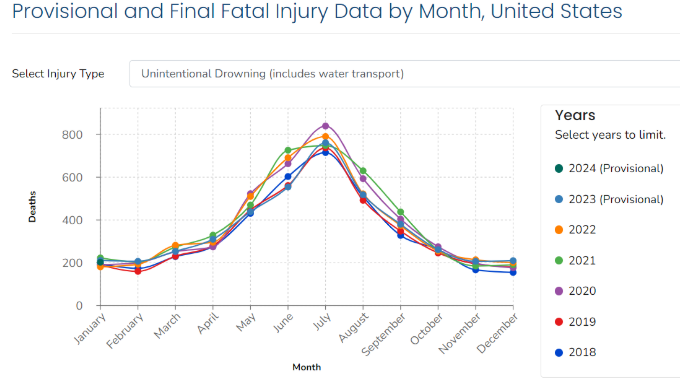
Off-season water accidents rarely involve a child intentionally jumping into a pool to go for a swim. Instead, they occur during routine afternoon play, outdoor family gatherings, or casual neighborhood outings when no one expects a child to enter the water.
A vast majority of homes in communities throughout St. Johns County feature screened-in patio pools. While these enclosures protect against insects and debris, parents often grant themselves a false sense of security believing the screen acts as a complete protective barrier.
During busy school nights, patio doors leading to the pool area are often left unlatched while adults focus on making dinner, checking homework, or answering emails. A curious toddler can slip out onto the patio deck in seconds. Without a self-closing interior pool safety fence separating the house interior from the water, an open lanai remains a serious hazard.
Master-planned neighborhoods across St. Johns County are built around retention ponds, drainage canals, and natural marsh tributaries feeding into the St. Johns River or the Intracoastal.
When children walk home from school, ride bikes with friends, or play outside during cooler fall evenings, these water features pose silent risks. Unlike municipal pools, retention ponds have muddy slopes, zero underwater clarity, steep drop-offs, and no lifeguards. Slipping into a neighborhood pond while chasing a ball can submerge a fully clothed child instantly.
Back-to-school season introduces new friends and invitations to playdates at classmates' houses. Parents routinely drop their kids off assuming standard adult supervision. However, water safety measures vary greatly from household to household.
A host parent might be working inside assuming the children are playing games in a bedroom, while the kids wander out to an unmonitored backyard hot tub, pool, or nearby drainage ditch.
Northeast Florida autumns offer fantastic beach weather, bringing families out to St. Augustine Beach and Vilano Beach long after summer crowds thin out. However, county lifeguard tower staffing scales back significantly after Labor Day. Navigating sudden rip currents or unexpected drop-offs without active tower coverage dramatically increases risk for coastal visitors.
Living in St. Johns County means water awareness is an essential life skill rather than just a seasonal hobby.
A CDC Vital Signs report underscores that drowning is the leading cause of accidental injury death for children ages 1 through 4 nationwide. Research shows that participating in formal, structured swim instruction reduces drowning risk in young children by up to 88%.
Structured learning is critical. While casual summer pool play helps children feel comfortable, it rarely teaches the instinctual self-rescue skills needed during a sudden fall into water.
Pausing swim lessons in September leads to skill regression over the fall and winter months. Breath control weakens, floating habits fade, and physical stamina drops. Year-round indoor swim lessons deliver distinct safety advantages:
Protecting your family as school routines kick into high gear involves a few consistent habits:
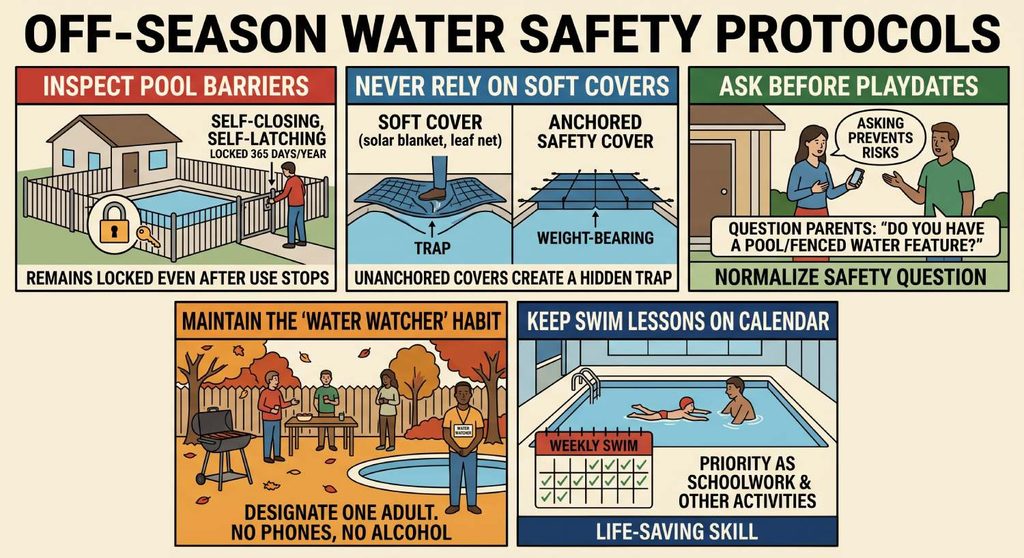
Water safety is a constant priority in St. Johns County. By understanding local environmental hazards and supporting ongoing skill development, you give your child the protection they need around water in every season.
If you want to build strong, life-saving water skills for your child that endure through every season, Hudson Valley Swim - Saint Johns is here to support your family. Our team offers year-round indoor swim lessons in a warm, comfortable pool setting inside the Holiday Inn Express in St. Augustine.
Ready to enroll or learn more? Check out class schedules and program options on our Pricing & Schedule page, or call our local team directly at (904) 442-8288.
Location:
Hudson Valley Swim® - Saint Johns
Holiday Inn Express
2300 FL-16
St. Augustine, FL 32084
When people think about learning to swim, they often picture freestyle, backstroke, or diving into the pool.
But one of the most important water skills isn't a swim stroke at all.
It's learning how to float.
Living in St. Augustine means having easy access to pools, nearby beaches, and countless opportunities to enjoy the water throughout the year. At Hudson Valley Swim, floating is one of the first skills we introduce in our swim lesson programs because it helps swimmers build confidence, stay calm, and develop the foundation for everything that comes next. Whether someone is a young child taking their first lesson or an adult learning to swim later in life, knowing how to float is one of the most valuable skills they can develop.
While floating alone is not a substitute for knowing how to swim, it is an important survival skill that can make a meaningful difference if someone unexpectedly finds themselves in deep water.
Why Floating Is One of the First Skills Taught
Learning to float isn't simply another milestone in swim lessons. It's one of the building blocks that supports every other swimming skill.
Before swimmers begin learning strokes or refining technique, they first need to become comfortable allowing the water to support them. That's why floating is introduced early in our swim lesson programs.
As swimmers learn to float, they begin developing the ability to:
Once swimmers feel comfortable floating, they're often more prepared to tackle the next stages of learning with confidence.
Panic Is Often More Dangerous Than the Water
Unexpectedly finding yourself in deep water can feel overwhelming.
Whether it's a child who wanders into deeper water than expected or an adult who suddenly loses confidence, panic can quickly make a situation more difficult.
When people panic, they often:
One of the reasons we place such an early emphasis on floating is because it helps swimmers learn to slow down, relax, and trust the water instead of fighting against it.
Remaining calm creates opportunities to think clearly and make safer decisions.
Floating Gives Swimmers Time
One of the greatest benefits of learning to float is that it buys time.
Time to catch your breath.
Time to stay calm.
Time to regain confidence.
Time to signal for help if needed.
Even experienced swimmers can become tired after extended periods in the water. Floating provides an opportunity to recover without constantly using energy to stay above the surface.
Instead of exhausting yourself by struggling to tread water continuously, floating allows your body to rest while keeping your airway above the water whenever possible.
Floating Builds Confidence
One of the biggest transformations we see during swim lessons has nothing to do with learning strokes.
It happens when swimmers realize they can trust the water.
Many beginners arrive believing that if they can't swim yet, they have no control once they're in the pool. Learning to float often changes that perspective completely.
As confidence grows, swimmers become more willing to practice new skills like:
Confidence isn't built in a single lesson. It grows through positive experiences, and learning to float is often one of the first major milestones.
Floating Is an Important Skill for Every Age
Floating isn't just for young children.
It's a valuable skill for:
Our swim lesson programs are designed to meet swimmers where they are, helping each individual build confidence and develop essential water safety skills at their own pace.
Floating Is Only One Part of Water Safety
Although floating is incredibly important, it's only one piece of becoming a safe and confident swimmer.
At Hudson Valley Swim, we believe strong water safety also includes:
Developing these habits alongside swimming skills helps create confident swimmers who make smart decisions around the water.
How We Teach Floating
Learning to float is a gradual process.
Rather than expecting swimmers to master it immediately, our instructors introduce floating step by step while encouraging comfort, confidence, and proper body position.
Lessons often begin with simple water familiarization before progressing to supported floating exercises, breathing techniques, and eventually independent floating as swimmers become more comfortable.
Every swimmer learns differently, and that's perfectly okay. Some gain confidence quickly, while others need more time. Our instructors focus on creating a supportive environment where every swimmer can progress at a pace that's right for them.
A Simple Skill That Can Make a Lifelong Difference
Floating may seem like a simple skill, but it plays an important role in both swimming development and water safety.
It helps conserve energy, encourages calm thinking, builds confidence, and creates the foundation for learning more advanced swimming techniques. While no single skill can eliminate every risk around water, learning to float gives swimmers an important tool that can help them stay safer and feel more confident whenever they're in the water.
In a community like St. Augustine, where swimming, boating, and beach days are part of everyday life, developing strong floating skills can help swimmers feel more prepared and confident whenever they head to the water.
If you're ready to build confidence in the water, explore our swim lesson programs and discover how Hudson Valley Swim St. Augustine helps swimmers of all ages develop lifelong swimming ability and essential water safety skills.
Enrolling your child in swim lessons is an exciting step, but it's also natural to have questions before that first class. Will they be comfortable in the water? What will they actually do? Will they be expected to swim right away?
At Hudson Valley Swim, we understand that every child starts their swimming journey at a different place. Some children can't wait to jump into the pool, while others need a little extra time to build confidence. That's exactly why our lessons are designed to meet swimmers where they are and help them progress one step at a time.
Your child's first lesson isn't about swimming across the pool. It's about creating a positive experience, building trust with their instructor, and introducing the foundational skills they'll continue developing throughout their swim journey.
We'll Start by Placing Your Child in the Right Class
Every swimmer is different, which is why we offer age and skill-appropriate programs instead of a one-size-fits-all approach.
Our youngest swimmers begin in Pollywog, where parents are in the water alongside their child. As children gain confidence, they progress through programs like Goldfish, Starfish, Lionfish, and beyond, with each level introducing new skills while reinforcing those they've already learned.
Older children and teens are placed into beginner, intermediate, or advanced classes based on their current swimming ability, ensuring they're challenged without feeling overwhelmed.
Starting in the right class allows every swimmer to learn at a comfortable pace while building confidence from day one.
Meet Your Hudson Valley Swim Instructor
One of the first things your child will do is meet their instructor.
Our instructors know that teaching swimming starts with building trust. They'll introduce themselves, welcome your child into the class, and take time to understand their comfort level before beginning any instruction.
Rather than expecting every swimmer to learn the same way, our instructors adapt their approach to each child. Some children are ready to jump right in, while others simply need encouragement and a few positive experiences before they begin trying new skills.
Creating a supportive environment helps children feel safe, confident, and excited to return for their next lesson.
Building Confidence Comes Before Swimming Skills
During the first lesson, the focus is on helping children become comfortable in the water.
For many younger swimmers, that means participating in fun activities that naturally introduce foundational swimming skills. Depending on your child's age and class level, they may practice:
These early activities may seem simple, but they're the building blocks for everything that comes later. Children who feel comfortable in the water are better prepared to learn proper swimming technique as they continue progressing through our program.
Parents Play an Important Role
Many parents wonder if they'll be in the water during their child's first lesson.
For our youngest swimmers in the Pollywog program, parents participate in every lesson. Together, you'll learn techniques that help your child feel safe and comfortable while enjoying songs, toys, and games that make learning fun.
In our Goldfish program, parents remain in the water while children begin working more directly with their instructor and gain confidence becoming more independent.
As swimmers move into our elementary programs, including Starfish and Lionfish, they begin working independently with their instructor while parents cheer them on from the pool deck.
This gradual progression helps children become more confident while ensuring they always receive the support they need.
Every Lesson Builds on the One Before It
Your child's first lesson is just the beginning.
As swimmers become more comfortable, they'll continue developing new skills at each level of our program. What starts with blowing bubbles and floating eventually grows into freestyle, backstroke, breaststroke, butterfly, side breathing, treading water, diving, endurance training, and refined stroke technique.
Because every class builds on previously learned skills, children develop confidence while steadily becoming stronger, safer swimmers.
It's Okay If Your Child Is Nervous
Not every first lesson looks the same.
Some children smile from the moment they enter the pool. Others may cling to a parent, hesitate before getting in the water, or become emotional during those first few minutes.
All of these reactions are completely normal.
Our instructors work patiently with every swimmer, celebrating small victories along the way. For one child, success might be putting their face in the water for the first time. For another, it may be floating independently or kicking across a short distance.
Learning to swim is a process, and confidence often grows a little more with each lesson.
How Parents Can Help After Class
The encouragement children receive after class is just as important as what happens during the lesson.
Celebrate their effort rather than focusing only on new skills. Ask them what they enjoyed most, praise their willingness to try something new, and remind them that every lesson helps them become more comfortable in the water.
Avoid comparing your child's progress to others. Every swimmer develops at their own pace, and consistent attendance is one of the biggest factors in long-term success.
Every Great Swimmer Starts Somewhere
Every confident swimmer began with a first lesson.
At Hudson Valley Swim, our goal is to help every child build confidence, develop strong swimming skills, and become safer in and around the water. Whether your child is just beginning in our Pollywog program or is ready for one of our more advanced classes, they'll be guided by experienced instructors who understand how to make learning both effective and enjoyable.
If you're ready to get started, explore our swim lessons to find the program that's the right fit for your family. We look forward to welcoming you to Hudson Valley Swim and helping your child begin a lifelong journey of confidence in the water.
Starting swim lessons is an exciting milestone, whether you're enrolling a young child or learning to swim yourself.
It's normal to have a few questions before your first visit. What should you bring? What should you wear? Is there anything you should do before arriving?
The good news is that preparing for your first swim lesson is simple.
At Hudson Valley Swim, we want every swimmer to feel comfortable and confident from the moment they walk through our doors. Bringing a few essential items, and knowing what to expect, can help make your first lesson a smooth and enjoyable experience.
For families in St. Augustine, where pools, beaches, and year-round warm weather make swimming a regular part of life, arriving prepared helps swimmers start building confidence from day one.
Arrive Ready to Swim
One of the easiest ways to prepare is by arriving dressed in your swim attire.
Our facilities include changing pods on the pool deck if you need them after your lesson, but we recommend arriving ready to swim so you can check in, meet your instructor, and get into the water without feeling rushed.
We also recommend arriving a few minutes early for your first lesson. Giving yourself a little extra time helps everyone settle in before class begins and allows you to start your lesson feeling relaxed.
Wear a Bright Swimsuit
Your swimsuit does more than provide comfort. It also helps improve visibility in the water.
We recommend choosing bright, vibrant colors whenever possible. Bright swimsuits are easier for instructors to see during lessons and can make swimmers more visible in the water.
Whenever possible, avoid swimsuits that are:
Choosing a brightly colored swimsuit is a simple way to improve visibility while creating a better learning environment.
Bring a Pair of Goggles
If there's one item we recommend bringing to every lesson, it's a comfortable pair of goggles.
Goggles help remove one of the biggest barriers many beginners face, putting their face in the water.
Instead of worrying about water getting into their eyes, swimmers can focus on learning new skills and listening to their instructor.
Goggles also help:
It's common for new swimmers to pop up and immediately rub their eyes or look for a towel. Goggles help eliminate those distractions so swimmers can stay engaged and continue building confidence throughout the lesson.
Long Hair? Bring a Swim Cap or Tie It Back
Long hair can quickly become a distraction during swim lessons.
Hair that falls into a swimmer's face often needs to be pushed aside, making it harder to focus on learning and following instructor directions.
For swimmers with hair that reaches their shoulders or longer, we recommend either:
Keeping hair out of the face allows swimmers to concentrate on learning while also helping keep the pool cleaner.
Don't Forget a Towel
It may seem simple, but it's easy to forget a towel when you're preparing for your first lesson.
Having one ready on the pool deck allows swimmers to dry off comfortably after class before heading home.
Swim Diapers for Infants and Toddlers
For swimmers under the age of three, we require they wear both:
Using both provides an extra layer of protection and helps reduce the chance of accidents that can result in temporary pool closures.
It's a simple step that helps keep lessons running smoothly for every family participating in the program.
A Few Optional Items
Although not required, a few extra items can make your visit even more convenient.
Many swimmers also choose to bring:
These items aren't required, but they can make transitioning to and from your lesson a little easier.
What You Don't Need to Bring
First-time swimmers sometimes assume they should bring their own pool toys or training equipment.
Our instructors provide the equipment needed during lessons, allowing swimmers to focus on learning proper techniques instead of bringing extra gear from home.
Leave items like floaties, kickboards, pool noodles, and toys at home unless your instructor specifically recommends otherwise.
You're Ready for Your First Lesson
Preparing for your first swim lesson doesn't have to be complicated.
Arriving in your swimsuit, bringing goggles and a towel, wearing a bright-colored swimsuit, and tying back long hair are simple steps that can help create a positive first experience in the water.
Whether you're introducing a child to swim lessons or beginning your own swimming journey, coming prepared allows you to spend less time worrying about logistics and more time building confidence in the pool.
If you're ready to get started, explore our swim lesson programs and discover how Hudson Valley Swim St. Augustine helps swimmers of all ages build confidence, develop lifelong swimming skills, and stay safer in and around the water.
Whether you're enrolling your child in swim lessons or learning to swim yourself, it's natural to wonder how quickly progress will happen.
Some people seem to gain confidence in the water almost immediately, while others feel like they're making slower progress. Then life gets busy. A vacation, illness, or a packed schedule leads to a few missed lessons, and it can feel like you're back where you started.
The good news is that this is completely normal.
Learning to swim is much like learning to ride a bike, play an instrument, or speak a new language. Progress doesn't happen overnight. It develops through layering of skills, regular practice, repetition, and growing confidence over time.
In St. Augustine, where pools, beaches, and boating are part of everyday life, developing strong swimming skills isn't just about recreation. It's also an important part of staying safe around the water.
The biggest factor in long-term success isn't natural talent. It's consistency.
Swimming Skills Are Built Through Repetition
Every swim lesson builds on the one before it. We call this layering skills. Think about how children are taught to read. It starts with learning letters, then blends, then words, then composing sentences. Learning swimming skills is done much in the same way.
Whether someone is learning to float for the first time, improving their freestyle, or becoming more comfortable in deep water, swimming is a skill that develops through repeated practice.
Each lesson reinforces movements, improves coordination, and helps build muscle memory. Over time, swimmers begin spending less time thinking about each movement and more time swimming naturally and confidently.
Early lessons often focus on foundational skills like:
These may seem like small accomplishments individually, but together they form the foundation for confident swimming.
Missing Lessons Can Slow Progress
Everyone misses a lesson occasionally. Vacations, work, school, illness, and family commitments are all part of life.
However, frequent or extended breaks between lessons can slow progress.
Without regular practice, swimmers may need time to rebuild confidence or refresh skills before moving on to more advanced techniques. Instructors often spend part of the lesson reviewing previously learned skills rather than introducing new ones.
That doesn't mean all progress is lost. It simply means consistency helps maintain momentum and keeps learning moving forward.
Confidence Grows Through Familiarity
Swimming isn't just about technique. It's also about confidence.
As swimmers attend lessons consistently, they become more comfortable with:
For children, this familiarity often makes it easier to try new skills without fear.
For adults, it can reduce anxiety and help replace uncertainty with confidence.
When swimmers feel comfortable in their surroundings, they're able to focus more energy on learning instead of overcoming nerves.
Everyone Learns at Their Own Pace
One of the most common questions instructors hear is, "How long will it take to learn?"
The honest answer is that every swimmer is different.
Progress can be influenced by factors such as:
One of the few factors swimmers and families can control is consistency.
Showing up regularly provides more opportunities to practice, reinforce skills, and continue building confidence from one lesson to the next.
Learning to swim isn't about racing through levels. It's about developing skills that last a lifetime.
Can More Than One Lesson Per Week Help?
For many swimmers, one lesson each week provides an excellent foundation for steady progress.
Some individuals and families choose to attend multiple lessons each week to increase practice opportunities.
More frequent lessons can reinforce newly learned skills while they're still fresh, helping swimmers continue building confidence and improving technique.
While attending multiple lessons isn't necessary for success, maintaining a consistent schedule is one of the best ways to support steady improvement.
How to Keep Building Skills Between Lessons
Progress doesn't have to stop when class ends.
There are plenty of simple ways to reinforce swimming skills between lessons, including:
For parents, creating positive experiences around water can help children build confidence outside of formal instruction. Adult swimmers can also benefit from spending additional time in the water to reinforce what they've learned.
With so many opportunities to enjoy the water throughout the St. Augustine area, from neighborhood pools to nearby beaches, maintaining those skills through consistent practice can help swimmers stay confident wherever they choose to swim.
Consistency Builds Lifelong Confidence
Learning to swim is a journey that happens one lesson at a time.
Whether the goal is helping a child become safer around water, preparing for recreational swimming, or finally learning a skill you've always wanted to master, consistency is one of the biggest drivers of long-term success.
Regular swim lessons provide the repetition, encouragement, and confidence needed to develop strong swimming skills over time.
If you're looking for swim lessons in St. Augustine, Hudson Valley Swim offers programs for swimmers of all ages and skill levels. Explore our swim lesson programs and discover how consistent, engaging instruction can help swimmers become safer, stronger, and more confident in the water.
One of the most common questions parents ask before signing up for swim lessons is simple:
“How long will it take for my child to learn to swim?”
The honest answer is that it depends on what “learning to swim” means for your child.
For some swimmers, learning to swim means becoming comfortable in the water, floating independently, and building basic safety skills. For others, it means confidently swimming across the pool, understanding multiple strokes, and feeling comfortable in deeper water.
At Hudson Valley Swim, many children begin building confidence and foundational skills during an 8-week swim session through our swim lesson programs, but swimming is often a gradual process that develops over time. Just like learning to read, ride a bike, or play a sport, progress happens through consistency, repetition, and practice.
The good news is that most families start noticing meaningful progress much sooner than they expect.
What Progress Can Families Expect During an 8-Week Swim Session?
At Hudson Valley Swim, lessons are structured into 8-week sessions to help swimmers build confidence through consistent instruction and repetition. While every child progresses differently, many swimmers begin developing important foundational skills during their first session.
For beginner swimmers, this may include becoming more comfortable in the water, learning to float, putting their face underwater, improving breath control, kicking with better coordination, and safely reaching the wall independently.
For many parents, the biggest change is confidence. Children who once felt nervous about the pool often become calmer, more comfortable, and more willing to try new skills after several weeks of lessons.
That said, finishing one 8-week session does not necessarily mean a child has fully “learned to swim.” Rather, it often marks the beginning of a stronger foundation that future skills can build on.
Learning to Swim Looks Different for Every Child
One reason this question can be difficult to answer is because swimming ability exists on a spectrum.
For some children, learning to swim simply means developing enough comfort and awareness to move safely through water and respond calmly if they accidentally end up in deeper water. For others, swimming may mean confidently crossing the pool, building endurance, and learning proper stroke mechanics.
Every swimmer progresses differently depending on their age, comfort level, previous exposure to water, and overall confidence.
A child who spends time in pools regularly may progress more quickly than someone who is nervous around water or just getting started. Similarly, older children may understand instructions faster, while younger swimmers may need more repetition as they build trust and confidence.
Neither experience is wrong. Progress simply looks different for every swimmer.
Water Confidence Usually Comes First
For many beginners, especially younger swimmers, the first stage of learning to swim focuses on water comfort and safety.
Before children can confidently swim independently, they first need to feel comfortable in the water itself. That means learning to trust instructors, becoming more relaxed around the pool, understanding how their body moves in water, and developing basic safety habits.
For children just getting started, infant & toddler swim lessons and beginner-focused programs can help build confidence in a supportive environment.
This stage often includes skills such as:
Some children develop water confidence quickly. Others take more time, particularly if they feel hesitant or nervous. That is completely normal.
The goal is not rushing progress. The goal is helping swimmers build a positive relationship with water while developing skills safely and consistently.
Learning Swim Strokes Takes More Time
Once swimmers feel comfortable and confident in the water, instruction often shifts toward stronger technique and stroke development.
This is where many parents begin redefining what “learning to swim” really means.
Basic water safety skills can develop relatively quickly, but learning to swim confidently with proper technique usually takes more time.
Developing foundational strokes like freestyle, backstroke, breaststroke, and elementary backstroke often happens gradually. While many swimmers begin learning these movements early, building enough coordination and confidence to perform them well for short distances takes continued instruction and repetition.
Many swimmers begin introducing these skills in elementary swim lessons or youth swim lessons as their confidence grows and they become ready for more advanced instruction.
Swimming is more than simply moving arms and legs. Swimmers are learning breathing patterns, body positioning, timing, coordination, endurance, and water awareness all at once.
This is why consistent lessons tend to matter so much. Strong technique develops over time.
Why Some Children Learn Faster Than Others
Parents often wonder whether their child is progressing “fast enough.”
In reality, there is a wide range of what normal progress looks like.
Several factors can influence how quickly a swimmer develops, including age, previous water exposure, confidence, consistency, and personality.
Some children are naturally adventurous and eager to jump in right away. Others need more time to build trust before feeling comfortable trying new skills. Children who attend lessons consistently and spend time practicing between sessions also tend to progress faster than swimmers with long breaks between lessons.
This is one reason many families continue enrolling in ongoing swim lessons as skills develop and confidence grows over time.
The important thing to remember is that swimming is not a race.
Progress is rarely perfectly linear. Some weeks may feel slower than others before a child suddenly experiences a major breakthrough.
Is One Session Enough to Learn to Swim?
For some swimmers, one 8-week session may be enough to build confidence and basic independent swimming skills.
For others, especially children working toward stronger stroke technique or greater endurance, learning to swim may take multiple sessions.
This is particularly true for swimmers learning to:
For swimmers who would benefit from more individualized instruction or extra confidence-building, private swim lessons can sometimes help accelerate progress and provide additional support.
The encouraging part is that once swimmers build foundational confidence, continued progress often becomes easier and more noticeable over time.
So, How Long Does It Really Take to Learn to Swim?
For many children, noticeable progress begins during their first 8-week swim session. Families often see increased confidence, stronger water safety habits, and meaningful improvements in comfort and independence.
However, truly learning to swim with confidence often happens in stages. Most swimmers first build comfort in the water, then confidence, followed by stronger swimming technique, endurance, and stroke development as lessons continue.
Every swimmer’s timeline is different, and that is completely normal.
What matters most is consistency. With supportive instruction, patience, and regular practice, children can continue building swimming skills that help them feel safer, stronger, and more confident around water over time.
Explore our swim lesson programs today and help your swimmer build confidence and skills that can last a lifetime.

Help your swimmer build essential water safety skills, confidence, and a lifelong love of swimming!